A video funnel is a buying path where the visitor answers a five to fifteen question quiz, then receives an analysis video edited from those answers. Two people never see the same film. What each one hears depends on what they typed thirty seconds earlier.
Video funnel: the definition, and the two things that share the name
A video funnel is a sales path where the prospect answers an interactive quiz, then receives a personalized analysis video built from those answers, followed by automated follow-ups. The video is assembled from segments the seller actually filmed, picked to match the respondent’s profile.
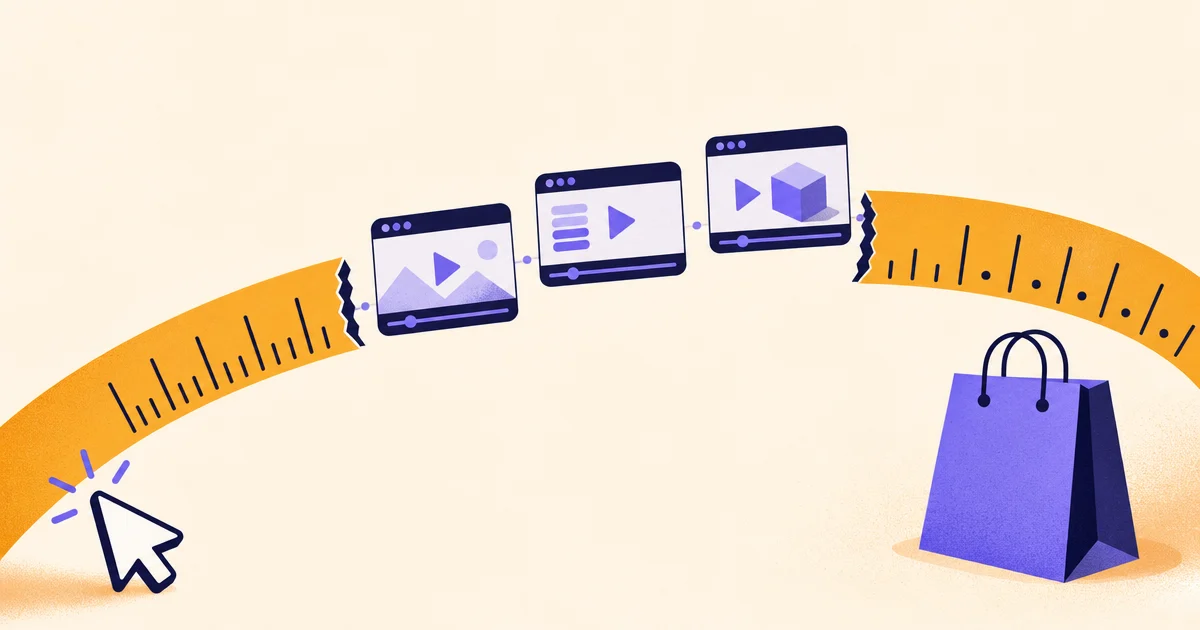
Search the term and you will mostly find something else: a plan for mapping video types onto the buyer journey, a teaser at the top, a testimonial in the middle, a demo at the bottom. That method is real and it has carried the same name for a decade. It also changes nothing about what a given visitor sees when they land on your page.
One question separates the two. Does the content adapt to the person watching it? A stage-by-stage video plan sends the same film to everyone and relies on ad targeting to sort people out beforehand. A video funnel in the strict sense produces a different film per respondent. The rest of the vocabulary follows: quiz funnel, qualification quiz, personalized analysis video.
How it works, from quiz to delivered video
Five steps. Only one of them costs you real work.
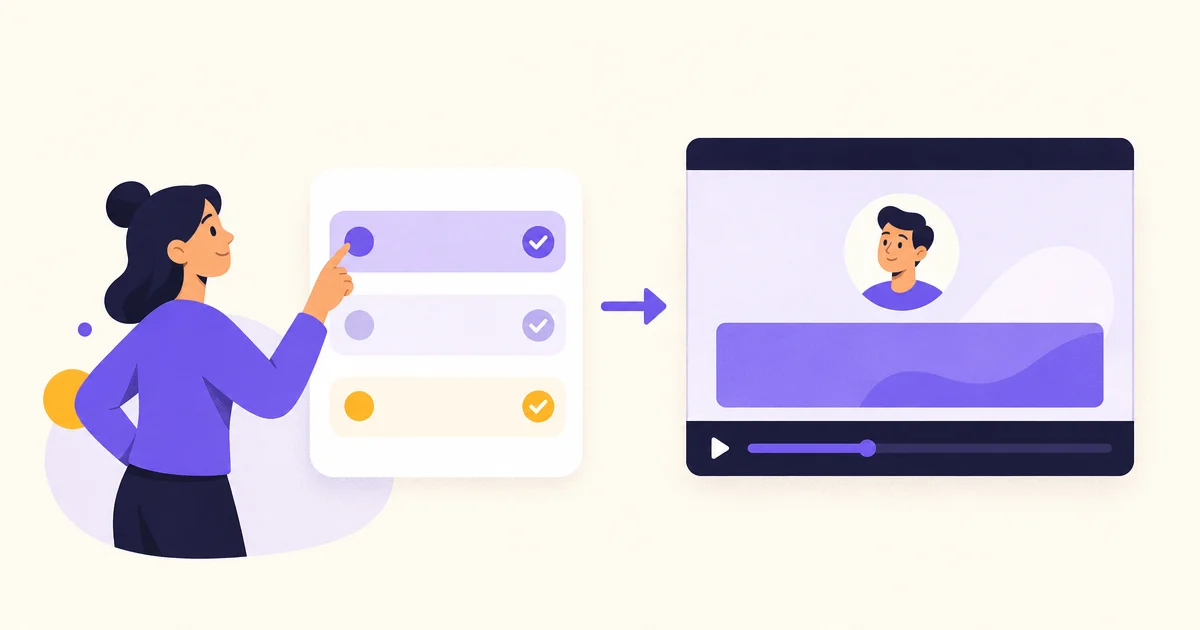
- The quiz. Five to fifteen questions, asked on screen by a short clip of the seller. Each answer pulls the visitor a little further in, and all of it happens before any offer appears.
- The sort. Answers place the respondent somewhere: budget, urgency, real blocker, experience level.
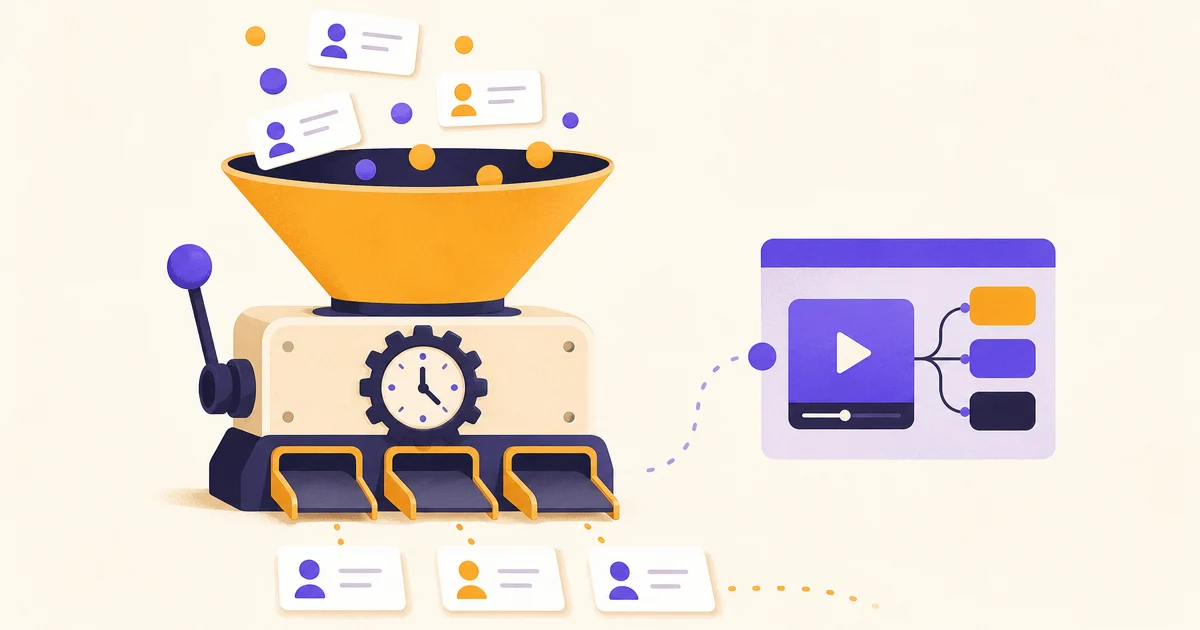
- The edit. Software stitches pre-filmed segments into a continuous ten to fifteen minute video built around that profile.
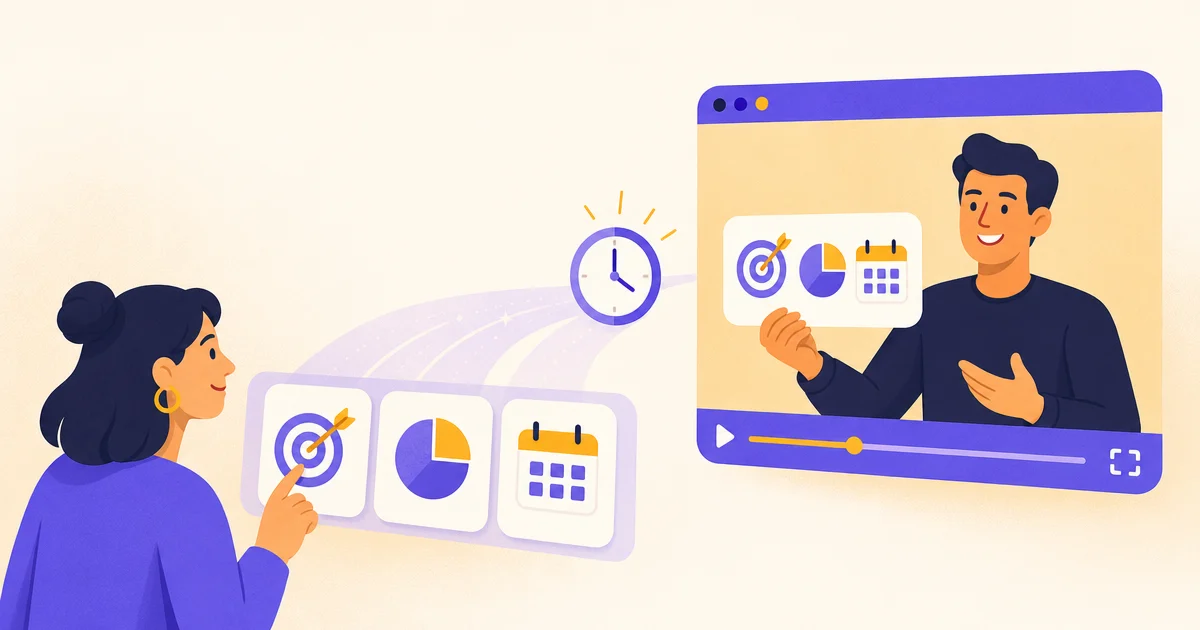
- The delivery. The prospect gets the video shortly after finishing, around two hours in the use case shown on our home page.
- The follow-up. Automated sequences, the lead pushed into your CRM, payment or a booked call.
Combinatorics does the heavy lifting. Five questions with three options each already produce hundreds of possible versions out of roughly twenty filmed segments. You film the building blocks once. The funnel recombines them for months without you touching anything.
The numbers worth knowing before you build one
The backdrop has shifted, and not in a comfortable direction. Across the UK and Irish merchants tracked by IRP Commerce, July 2026 shows 14.52% fewer visitors than a year earlier, while cost per session climbed from £0.11 to £0.16. Average session conversion, meanwhile, edged up to 2.22%. Fewer people arrive, each visit costs more to buy, and the only variable still fully yours is what happens once someone is on the site.
| Metric | Value | Source (year) |
|---|---|---|
| Ecommerce visitors, year over year | down 14.52% in July 2026 | IRP Commerce (2026) |
| Cost per session | £0.11 to £0.16, up 40% | IRP Commerce (2026) |
| Average session conversion rate | 2.22% of sessions | IRP Commerce (2026) |
| Cart abandonment | 70.22%, average of 50 studies | Baymard Institute (2025) |
| Abandoned while only browsing | 42% of shoppers surveyed | Baymard Institute (2025) |
| Extra costs too high | 40% of the remaining reasons | Baymard Institute (2025) |
That 42% figure deserves a pause. Baymard Institute asked US online shoppers why they walked away from a cart, and the answer that came back ahead of everything else was that they were only browsing. The rest of the list, unexpected costs for 40% of them, distrust of the payment step for 19%, forced account creation for 18%, gets solved with a shorter checkout. The first one does not. You cannot shorten a form into persuading someone who has not decided yet.
On video length, data from Wistia, drawn from 13 million videos and 79 million hours of viewing analyzed in 2026, says two things that look contradictory. Shorter videos hold a higher share of their runtime watched. Yet the longest formats, thirty to sixty minutes, drive the highest click-through on a call to action. The people who stay are the people who act.
Why declared data changes the outcome
The quiz costs the visitor time. Two minutes, sometimes three. That investment reframes everything after it: they have already moved, they want the result, and the video that arrives talks about their situation instead of the product in the abstract. Reciprocity does the rest, the same way it has always worked in a physical store.
The part most personalization articles miss has to do with where the data came from. An experiment published in Behavioral Sciences in 2025 by Kim and Han, run with 360 participants, found that personalization turns against the brand past a certain level of intrusiveness. Whether it flips depends on how privacy-sensitive the person feels when the message lands. Work by Petrova and coauthors in Psychology & Marketing in 2026 traces the same chain: a sense of being watched, then reactance, then purchase intent dropping.
A quiz sidesteps that trap for a dull reason. The person typed the answers themselves, moments ago. There is no ambiguity about where the knowledge came from, so there is no room for suspicion. Nobody wonders how you know, because they told you.
The trade is demanding. The video has to earn the promise of an analysis. A funnel that asks fourteen questions and then serves everyone the same pitch gets caught inside two minutes, and the prospect feels worse than if they had filled in nothing at all.
Who it pays off for, and what setup takes
The format earns its keep when the buyer needs advice, reassurance or direction before choosing. The higher the basket and the harder the decision, the wider the gap against a plain product page.
| Sector | What the quiz asks | What changes |
|---|---|---|
| Jewelry, crystals | mood, who the gift is for | advice replaces a filter grid |
| Mattresses, furniture | sleep, body, budget | one recommendation instead of twelve SKUs |
| Skincare, wellness | skin type, routine, constraints | the shopper stops guessing |
| Fitness programs | goal, level, time available | the offer arrives after the diagnosis |
| High ticket SaaS | team size, current blocker | the sales call starts already qualified |
Setup work concentrates into roughly one day.
- Filming: two to four hours for about twenty segments, depending on how fine the analysis gets.
- Configuration: around thirty minutes, guided during onboarding.
- Gear: a recent phone and a window. Light matters more than the camera.
- Native integrations: Stripe, Klaviyo, Mailchimp, ActiveCampaign, Shopify, webhooks for the rest.
Two published results, attributed to the brands that reported them. Anna Velazia, in jewelry and crystals, asks fourteen questions about emotional state and delivers a twelve minute video: the brand reports a ROAS three times higher than its other campaigns and has moved 70% of its ad budget onto this channel. BodyTime, in fitness programs, reports a conversion rate multiplied by 2.5 on the same traffic, with thirteen minutes of attention captured before any offer appears. Those are their numbers, in their market, not a product average.
When a video funnel is the wrong call
On low-basket impulse buys the arithmetic collapses. A 19 dollar accessory carries neither two hours of filming nor a monthly subscription, and the shopper has no appetite for seven questions before checking out anyway.
Volume matters too. Under a few hundred qualified visitors a month, you have neither enough revenue to absorb the shoot nor enough respondents to tell signal from noise.
Here is the more awkward one. Wistia’s data shows that in retail and ecommerce, videos under three minutes earn the strongest engagement, while finance, insurance and wellness audiences sit through thirty minutes and more. A twelve minute analysis video therefore runs against the average behavior measured in the category. Our read is that the two audiences are not comparable, since one just answered a quiz and the other stumbled onto a product video, but nobody has published a controlled comparison between those two situations, and until someone does, treat the claim with care.
Then there is the product nobody needs advice about. If the buyer already knows the exact item they want, the quiz becomes paperwork and the analysis repeats what they knew.
Frequently asked questions
How is a video funnel different from a VSL?
A video sales letter plays the same argument to everyone, in the same order. A video funnel asks questions first, then edits a different video depending on the answers. The prospect has already invested time before the offer shows up, and the pitch opens on their situation. Production differs too: you film reusable segments rather than one finished film.
How many questions should the quiz have?
Five to fifteen, depending on how precise the analysis needs to be. Every extra question sharpens the profile and loses a share of respondents, which is the central trade of the format. Five questions with three options already generate hundreds of combinations. Past fifteen, the quiz starts to feel like paperwork and drop-off climbs.
Do I need professional gear to film the segments?
No. A recent phone and decent light are enough, because the prospect is looking for someone who talks to them rather than a polished production. Budget two to four hours of filming for around twenty segments. Audio deserves more attention than picture: a cheap lavalier mic does more for you than a better lens.
How long does the prospect wait for the video?
Around two hours in the use case shown on our home page. The delay gives the edit time to run and keeps the respondent curious, since they were told an analysis was coming. The video lands by email, the automated follow-ups run behind it, and the lead syncs into your CRM along the way.
Does this work in B2B?
Yes, when the sales cycle includes a real discovery phase. The quiz absorbs part of the qualification call: team size, current tooling, specific blocker. Your rep arrives with context already gathered and a video already watched. For simple, repeat B2B purchases, the format adds nothing a clear product page would not.