Zero-party data is the information a customer gives you voluntarily and explicitly about themselves: their need, their preferences, their context, their budget. It is worth nothing while it sleeps in a spreadsheet. It is worth a great deal when it triggers, within the hour, a recommendation the customer recognizes as the answer to what they just said.
What zero-party data means, and why everyone stops at collection
The term was coined by analyst Fatemeh Khatibloo at Forrester, in a report dated October 2018. The idea is simple. First-party data is what you observe about the customer on your site: pages viewed, purchases, clicks. Zero-party data is what they declare themselves, in answer to a question: "I have combination skin", "I run three times a week", "I'm buying for my mother", "my budget is $80". The first is inferred and often wrong. The second is stated, with the precision of someone talking about themselves.
Since then the subject has settled into every marketing blog, almost always from the same angle: how to collect it. Questionnaires, preferences at sign-up, contests, post-purchase surveys. One engagement-software vendor puts it bluntly in its own guide: most brands collect zero-party data just fine, and most fail to use it. We share that view, and this article starts exactly there. The question is not "how do we get the data?". It is "what happens for the customer in the minutes, hours and weeks after they answer?".
The cost of inaction is measurable on the customer's side. Salesforce, in its 2026 report across 16,585 consumers and business buyers, finds that 64% believe companies are reckless with customer data. In the same report, 73% say companies treat them as individuals rather than numbers, up from 39% in 2023: the bar has moved, and those who lag stand out. SAP Emarsys, across 10,000 consumers in 2026, finds 75% put off by disorganized experiences. A brand that asks for your skin type and then sends you the same newsletter as everyone else produces exactly that experience.
Declared data is only worth what it triggers
The principle comes before the method. An answer to a question is not a data point to store: it is the start of a conversation. The customer who tells you "sensitive skin, tight budget, just starting out" has made an effort, and expects something back, right away. McKinsey measured in 2021 that 71% of consumers expect personalized interactions and 76% get frustrated when they do not happen. The frustration is sharper when the person has just supplied the ingredients of the personalization themselves, whose effects we measured in our review of landing page personalization statistics. You asked, they answered, and nothing changed.
The other principle is the expiry date. A preference declared on the day of a search is worth gold that day, less the following week, almost nothing six months later, once the need has been met elsewhere. That is why the first activation must be immediate, and why later activations must stay attached to the answer rather than to the marketing calendar. Klaviyo's data across more than 183,000 brands (2026) gives the scale of the gap. Automated flows triggered by a behavior or a data point get 5.58% click rates, against 1.69% for campaigns sent to everyone. They generate nearly 41% of email revenue from 5.3% of sends. A message that responds to something the customer did or said is worth, in revenue per recipient, nearly 18 times a message that talks to everyone.
The method: from answer to action, in four moves
1. Ask only what you know how to use
Before writing a single question, write the decision it will enable. "What is your skin type?" chooses between three ranges: fine. "How old are you?" serves what, precisely? If the answer is "to segment later", the question goes. Every question asked with no planned use lengthens the journey, lowers completion and, worse, creates an expectation you will not meet: the customer who gave their age expects it to count. A good ecommerce questionnaire has between 5 and 15 questions, each matching a fork in what you will recommend or say.
2. Answer within the same journey, not in next month's newsletter
The first activation is not a welcome email. It is the recommendation itself, at the end of the journey, built from the answers and phrased in the customer's words: "you told me sensitive skin and a $40 budget, here is the product and here is why". RevenueHunt, across 45 million responses in more than 20,000 stores (2026), observes that 5.5% of visitors who finish a recommendation questionnaire place an order, roughly 2.75 times a typical store's rate, with an average order value 11 to 15% higher. The data was activated in the same minute it was given. It is the only moment the customer is certain it was used.
3. Write the data into the customer profile, not a spreadsheet
An answer that lives in a questionnaire tool's export is a lost answer. It must be written, at the moment it is given, as a property of the customer profile in your email platform or CRM: skin type, goal, budget, situation. In Klaviyo these are custom profile properties, which then build segments and trigger flows; Mailchimp, ActiveCampaign and Shopify have their equivalents, fields, tags or labels. The test is simple: if a colleague opens a customer's record and cannot see what that customer declared, the data is not activatable.
4. Keep it alive: follow up on the answer, not the click
The journey does not end when the customer orders, nor when they do not. RevenueHunt notes that one attributed order in five lands more than thirty days after the questionnaire. Those orders come from follow-ups that remember: "you were looking for sensitive-skin care, here is what our customers with the same profile tell us after a month", not "this week's new arrivals". Every follow-up reuses a declared element. Then, after purchase, the data keeps working: usage advice matched to the declared goal, a replenishment offer at the right rhythm, a follow-up question that updates the data when the situation changes.
| Question asked | Declared data | Immediate activation | Deferred activation |
|---|---|---|---|
| What is your main goal? | Goal (e.g. recovery, weight loss, performance) | The recommendation and its reasoning | Usage content and follow-ups by goal |
| What have you already tried? | History, disappointments | What the product does differently | Social proof from customers with the same path |
| What budget do you have in mind? | Price range | One product in the range, not three | The right offer at the right time, never above |
| Who are you buying for? | Self or someone else | Adapted tone and advice | Follow-up to the right person after purchase |
When what people declare contradicts what they do
The serious critique of zero-party data sits here: people say one thing and do another. The customer who declares a $40 budget sometimes buys at $90; the self-described "beginner" orders the expert product. It is true, and it is one more reason to activate fast. A declaration confronted with a behavior in the same week gets corrected: the customer record keeps the statement and logs the gap. A declaration filed for six months is confronted with nothing, and you end up segmenting on stale preferences. The declaration drives the first recommendation, behavior drives the next ones, and both live on the same profile.
There is also a way of asking that narrows the gap. "What is your budget?" invites understatement. "Of these three products, which looks closest to what you are after?" makes people declare a choice rather than an intention, and choices lie less. The quality of zero-party data is decided when you write the question, not when you clean the spreadsheet.
The most immediate activation: a video that answers what the customer just said
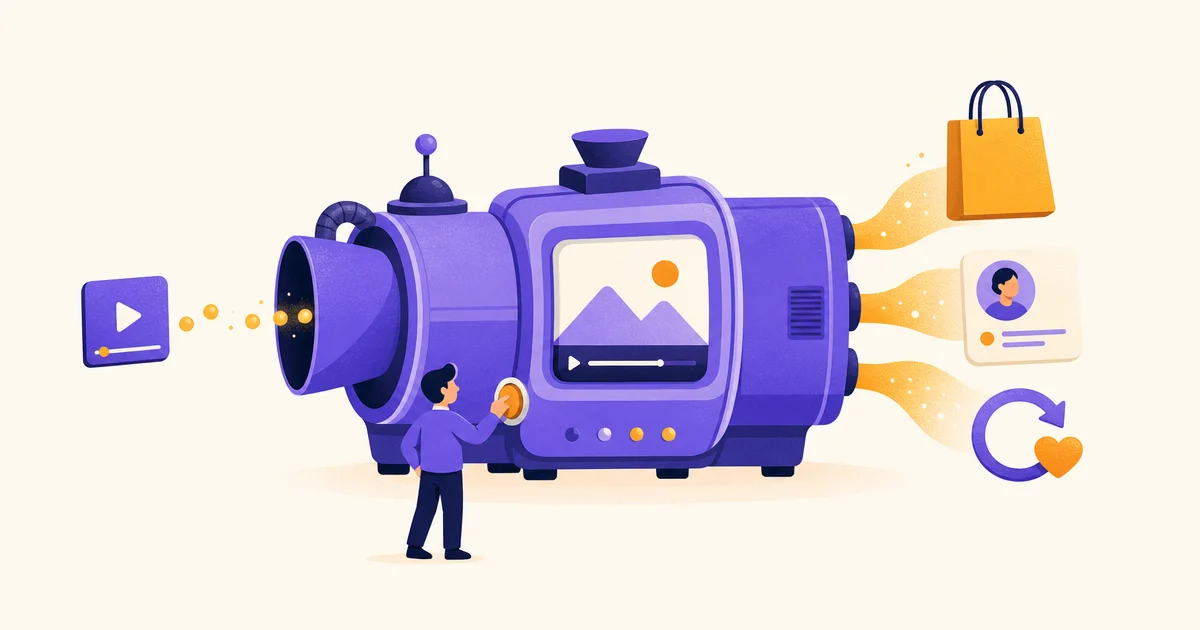
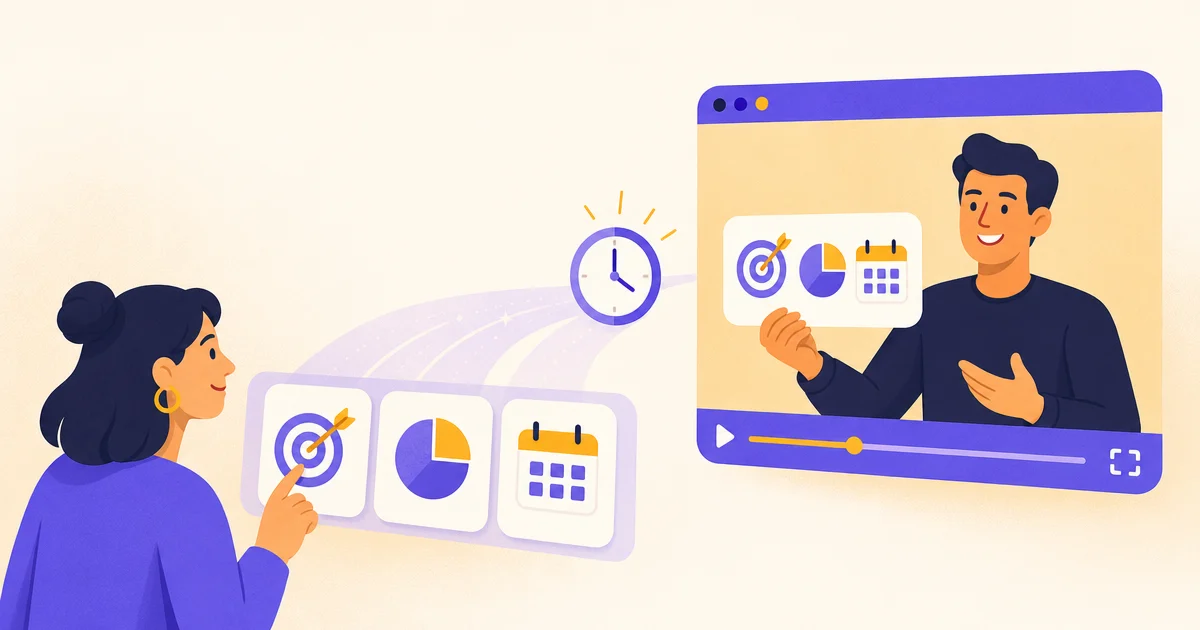
Apply the four moves to the letter and you get the description of a video funnel. The customer answers 5 to 15 questions, asked on video by the seller or the brand's founder: that is collection, and each question matches a fork. About two hours later they receive a personalized analysis video of 10 to 15 minutes, assembled automatically from their answers. The person on camera talks about their skin type, their goal, their budget, in their words: that is immediate activation, and it has a face. Their answers are written into the CRM and passed to Klaviyo, Mailchimp, ActiveCampaign or Shopify: that is the profile entry. And the follow-ups that come next reuse what they declared, up to payment or booking: that is durability.
What the video adds to the classic questionnaire is proof that the data was used. A results page shows a product; the customer may doubt anyone listened. A video in which someone says "you told me you had already tried two ranges with no result, here is why I am not suggesting the third" leaves no doubt. Zero-party data becomes visible to the person who gave it. That is the only convincing answer to the 64% of consumers who find companies reckless with their data: show them, within the hour, what you did with it for them.
Anna Velazia, a jewelry and crystal-healing brand using VideoFunnel, asks 14 questions and returns a 12-minute video. Fourteen answers per prospect, each activated twice: in the video, then in follow-ups and the CRM. The brand puts 70% of its ad budget behind that journey, whose return on ad spend is three times that of its other campaigns. Those are its results, on its products. They illustrate the principle of this whole article: declared data pays off exactly to the extent that the customer sees it working for them. The full setup is in our guide to the video funnel for ecommerce.
"A preference center does the same thing for less"
The preference center, that page where customers tick their interests and email frequency, collects zero-party data too. But it gives nothing back. The customer ticks, saves, and returns to their life; the brand files. It is a request, not an exchange, and customers feel it: people fill in a preference center to get fewer emails, not to be better advised. The data there is thin (checkboxes) and cold (no need expressed).
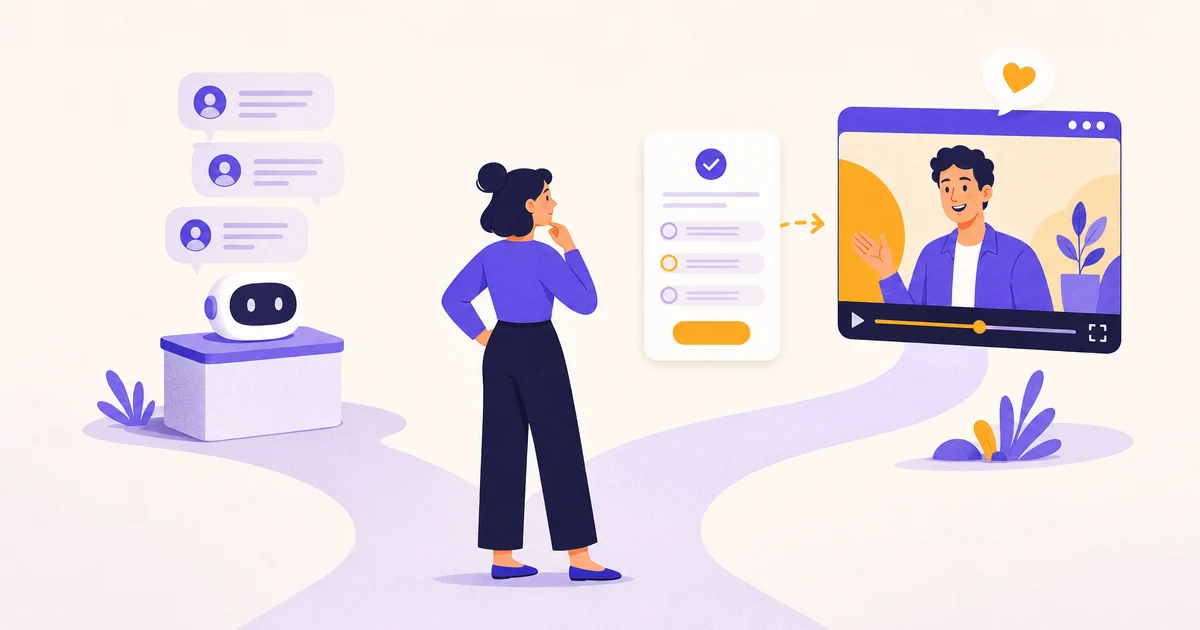
The chatbot is the other common objection: it asks questions and answers within the minute. It answers the questions the customer knows to ask, which is not the same as asking the customer the questions they should be asking, and it almost never writes what it learned into the customer profile. We compared the two approaches in AI chatbot versus quiz and video. The difference, once again, is not in collection. It is in what the customer sees come back.
The data a customer gives you is a question they are asking
Reread your forms, your questionnaires, your sign-up preferences with this idea: every filled field is a question the customer is putting to you. "Sensitive skin" means "what do you have for me?". "$40 budget" means "don't show me the rest". "Already tried it" means "prove this is different". A brand that collects without answering leaves those questions hanging, and the customer draws the conclusion they draw from anyone who does not answer.
The video funnel is the most direct way to answer: the question asked, the answer given, and two hours later a seller on camera who repeats that answer word for word and explains what they conclude from it. The data did not sleep. It was heard, and the customer knows it, because they saw it. That is what activating zero-party data means: not storing it more neatly, but giving it back to the person who provided it, as advice they recognize.
Frequently asked questions
What is zero-party data?
It is the information a customer shares voluntarily and explicitly with a brand: their preferences, need, context and budget, in answer to a question. The term was coined by Forrester in October 2018. It differs from first-party data, which is inferred from behavior observed on the site.
How do you collect zero-party data in ecommerce?
Through a questionnaire of 5 to 15 questions, each matching a decision the brand knows how to make: recommend a product, adapt advice, choose a follow-up. Sign-up preferences and post-purchase surveys collect it too, but with thinner data and no immediate answer for the customer.
How do you activate zero-party data once collected?
In four moves: answer within the same journey with a recommendation that reuses the customer's words, write every answer as a profile property in the CRM or email tool, follow up on what was declared rather than on the calendar, then update the data after purchase. Klaviyo measures that data-triggered flows get 5.58% click rates against 1.69% for campaigns (2026).
Why is a personalized analysis video the best activation?
Because it makes the data visible to the person who gave it. In a video funnel, about two hours after answering, the customer receives a video in which the seller, on camera, repeats what they declared and explains the recommendation. Their answers feed the CRM and follow-ups at the same time. Collection, immediate activation and durability sit in one journey.