The AI chatbot answers; the video funnel advises. For the factual question at 11pm, the parcel tracking, the refund, an ecommerce AI chatbot does the job well. For turning a hesitant visitor into a buyer on a cart that means commitment, the quiz followed by a personalized analysis video wins, and the trust numbers leave little room for debate.
What this comparison actually measures
On a store, "advising" covers two jobs the market's vocabulary keeps mixing up. Answering: delivering the requested information, right now, about shipping times or product composition. Advising: asking questions, understanding the situation, recommending with your credibility on the line, and making the customer want to follow the recommendation. The first job is a help desk. The second is a salesperson.
The AI chatbot and the quiz-plus-video duo both claim the second job. So this comparison judges them on that ground: the ability to run a diagnosis, the trust a customer grants the recommendation, the trace the conversation leaves for the brand, and what all of it produces in orders. Availability and entry cost matter too; they're in the table, and the chatbot scores its points there.
The match, in one table
Seven criteria, two columns, and a fault line that shows up fast: everything help-desk leans chatbot, everything sales leans quiz plus video.
| Criterion | AI chatbot | Quiz + personalized video |
|---|---|---|
| Availability | instant, 24/7 | quiz instant, video delivered about 2 hours later |
| Factual questions (shipping, sizing, support) | excellent | not its job |
| Needs diagnosis | depends on what the customer thinks to ask | structured: 5 to 15 questions, in the right order |
| Who embodies the advice | a machine, and the customer knows it | the person who sells, actually on camera |
| Trust granted | 79% of consumers prefer a human (SurveyMonkey, 2025) | an embodied pitch, watched voluntarily |
| Trace for the brand | a conversation that evaporates | a qualified lead, answers pushed to the CRM |
| Measured effect on sales | smooths the help desk; 64% prefer no AI (Gartner) | 5.5% order rate after the quiz, cart value +11 to 15% (RevenueHunt, 2026) |
Read line by line, the table describes a division of labor more than a duel. But the question in the title is about the advice that sells, and on that column the last two rows outweigh the first two. Here's why, side by side.
The AI chatbot: excellent help desk, contested salesperson
Give the chatbot its due. It's instant, tireless, cheap to install, and it absorbs the repetitive questions that drown a support team. AI genuinely moves commerce, too: over the 2025 holidays, Salesforce measured $262 billion in AI-influenced sales, 20% of the total, across data from 1.5 billion shoppers. Traffic from ChatGPT and Perplexity doubled its share and converts 9 times better than social traffic. AI brings people to the door, and that deserves to be taken seriously.
Bringing people isn't advising them. The moment advice begins is the moment customers balk, and they say so in every survey. 64% of customers would prefer companies not use AI in their customer service, and 53% would consider defecting to a competitor that installs it, according to Gartner (survey of 5,728 customers, published 2024). Their first fear: never reaching a human again. In late 2025, SurveyMonkey pressed the point with 2,017 adults: 79% prefer a human over an AI agent, 89% insist a human option must always exist, and 81% believe customer service AI exists to cut costs, not to serve them better. Customers accept the machine at the help desk. They don't hand it a decision that involves their money.
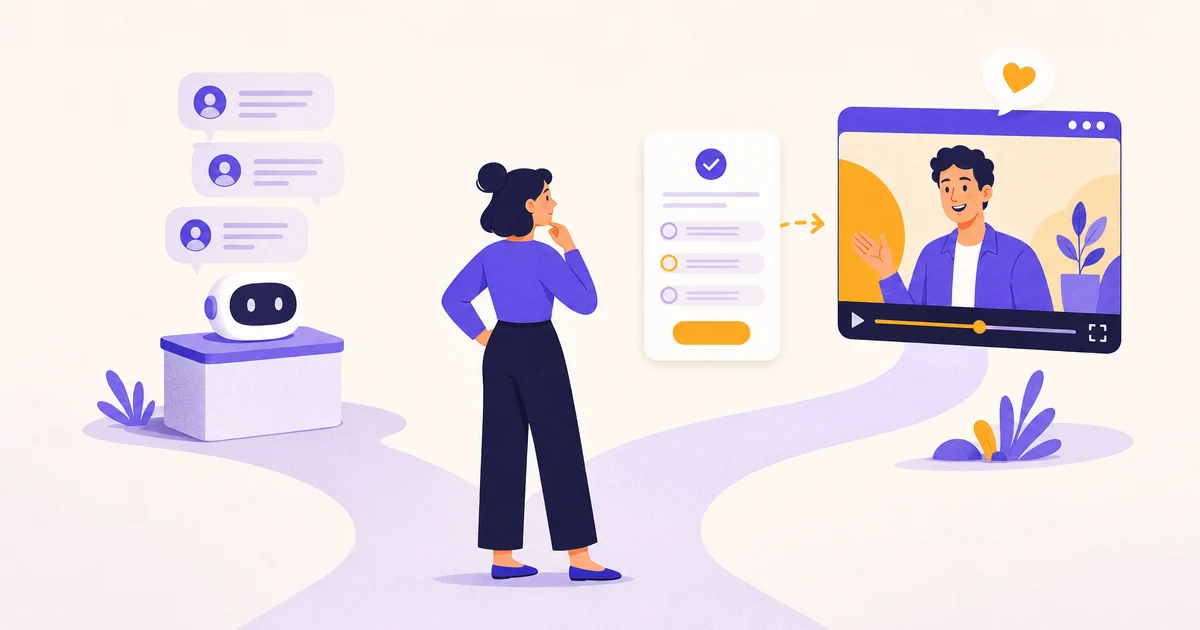
Then there's the nature of the exercise. A chatbot waits for questions; a visitor who needs advice usually doesn't know what to ask, and it's the salesperson's job to lead the conversation. An open chat with no steering produces answers. Rarely a decision.
Quiz plus video: how a salesperson actually works
The quiz runs the conversation the other way around: it asks the questions, in the order a good salesperson would choose. The format has numbers, and they're strong. Across 45 million responses collected in more than 20,000 stores, RevenueHunt (2026) measures that 69% of visitors who start a recommendation quiz finish it, and that 5.5% of finishers place an order, roughly 2.75x the average store rate. Their carts also run 11 to 15% above normal. A well-diagnosed customer buys more, and buys better.
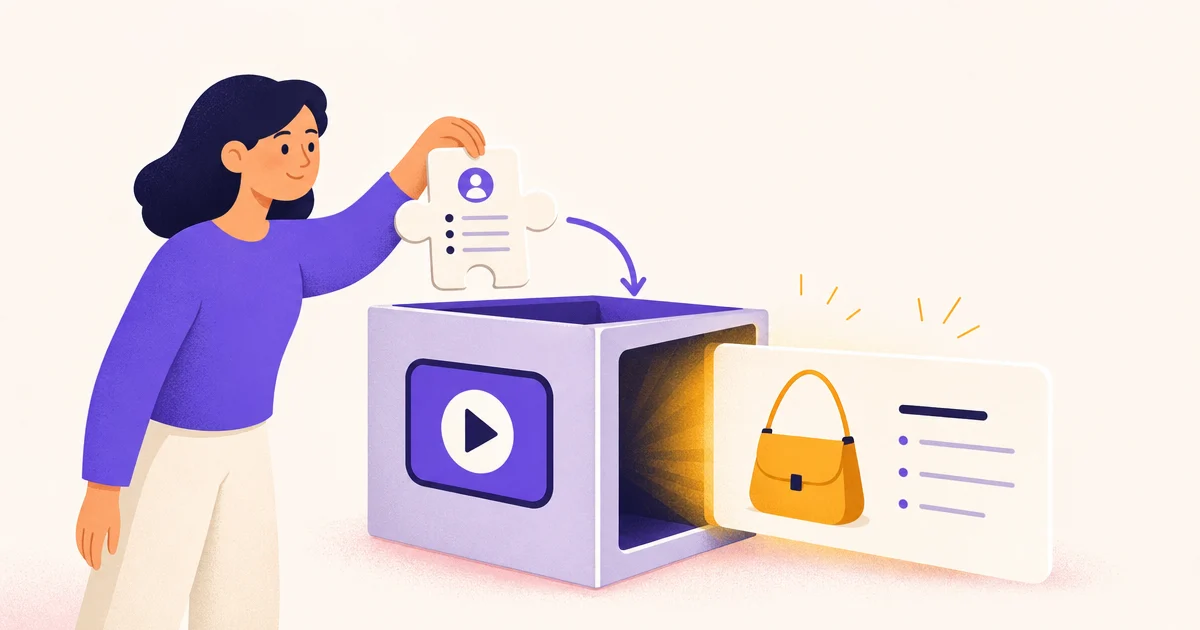
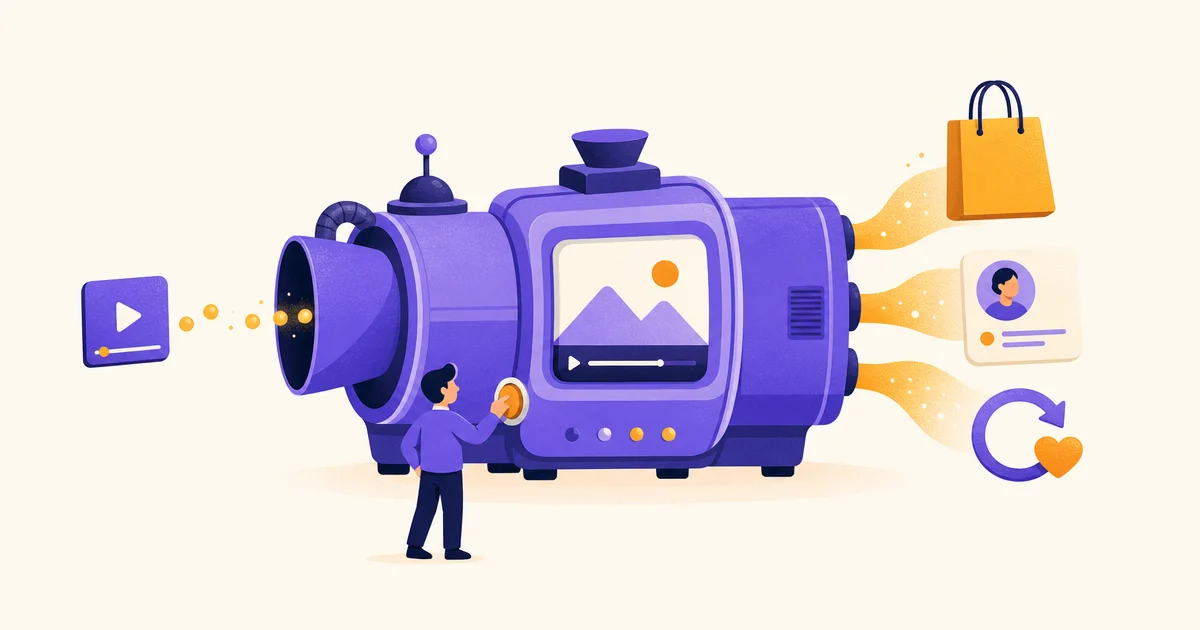
The personalized analysis video then turns that diagnosis into embodied advice. The quiz answers assemble a 10-to-15-minute video, edited from segments the brand actually filmed and delivered about two hours later. No avatars, no generated footage: the person who sells, on camera, talking about this customer's specific case. The prospect invested time in the quiz, receives ten minutes prepared for them, and watches a full pitch of their own free will. That's the complete mechanics of a video funnel, and it's what builds the trust the chatbot can't gather.
Stores running it give the scale. Anna Velazia, a jewelry and lithotherapy brand, an emotion-and-advice cart if there ever was one, moved 70% of its ad budget to its video funnel, now its top acquisition channel with 3x the ROAS of its other campaigns. BodyTime multiplied conversion by 2.5 on the same traffic, holding 13 minutes of attention before the offer appeared. Figures belonging to those two accounts. And while a chatbot conversation evaporates when the tab closes, every quiz answer stays: a qualified, segmented, contactable lead in the CRM.
How to choose for your store
Low-cart, impulse-buy store: a help-desk chatbot is plenty, and your support team will thank you. Advice doesn't decide the sale there; no need to post a salesperson.
High cart, complex choice, a product that needs a case made for it: mattresses, skincare, jewelry, sports equipment, anything that makes people hesitate for more than ten minutes. That's where advice decides the sale, and it's exactly where personalized video for ecommerce moves the numbers most. For the full mechanics applied to a store, from ads to retention, our piece on the video funnel for ecommerce walks the whole journey.
And nothing forces a single choice for everything. Chatbot at the help desk, video funnel on acquisition: the two coexist happily on the same store. The salesperson's job, though, doesn't get shared. The video funnel holds it.
What nobody says about this comparison
It isn't technology versus craftsmanship. A video funnel is every bit as automated as a chatbot: the edit assembles itself, delivery fires itself, follow-ups run themselves. The difference is in the raw material. On one side, text generated on the fly. On the other, segments a human actually filmed, once, looking into the lens.
And customers tell the difference instantly. When 81% of consumers believe customer service AI exists to save money at their expense (SurveyMonkey, 2025), a video filmed to answer their answers says the exact opposite: this brand spent time on me before I paid a cent. The chatbot simulates attention. The video funnel gives it. On a store where advice decides the sale, that attention is precisely what gets paid for.
Frequently asked questions
Do AI chatbots increase online store sales?
They mostly smooth the help desk: factual questions, support, round-the-clock availability. AI broadly does move commerce ($262 billion in AI-influenced sales over the 2025 holidays, per Salesforce), but trust in its advice hits a ceiling: 64% of customers would prefer companies not use AI in customer service (Gartner). For products that need advice, a structured diagnosis followed by an embodied pitch converts better.
What is a product recommendation quiz?
A short questionnaire that diagnoses a visitor's need before recommending the right product. The format has proven itself at scale: 69% of visitors who start one finish it, and 5.5% of finishers place an order, with carts 11 to 15% above average (RevenueHunt, 2026). In a video funnel, that quiz also feeds a personalized analysis video that argues the recommendation.
Chatbot or quiz: which one for a high average cart?
The quiz followed by a personalized analysis video. The more a cart commits the buyer, the more they want embodied advice before paying, and 79% of consumers prefer a human over an AI agent in that role (SurveyMonkey, 2025). The video funnel lets the quiz run the diagnosis, then puts the recommendation in the mouth of the person who sells, actually on camera.
Can you combine a chatbot and a video funnel?
Yes, and it's the natural division of labor: the chatbot staffs the help desk, factual questions and support, while the video funnel holds the sales job on acquisition. The two don't compete for the same work. What matters is not handing the sale to the help desk: the advice that triggers a purchase runs on trust, and trust goes to the human.