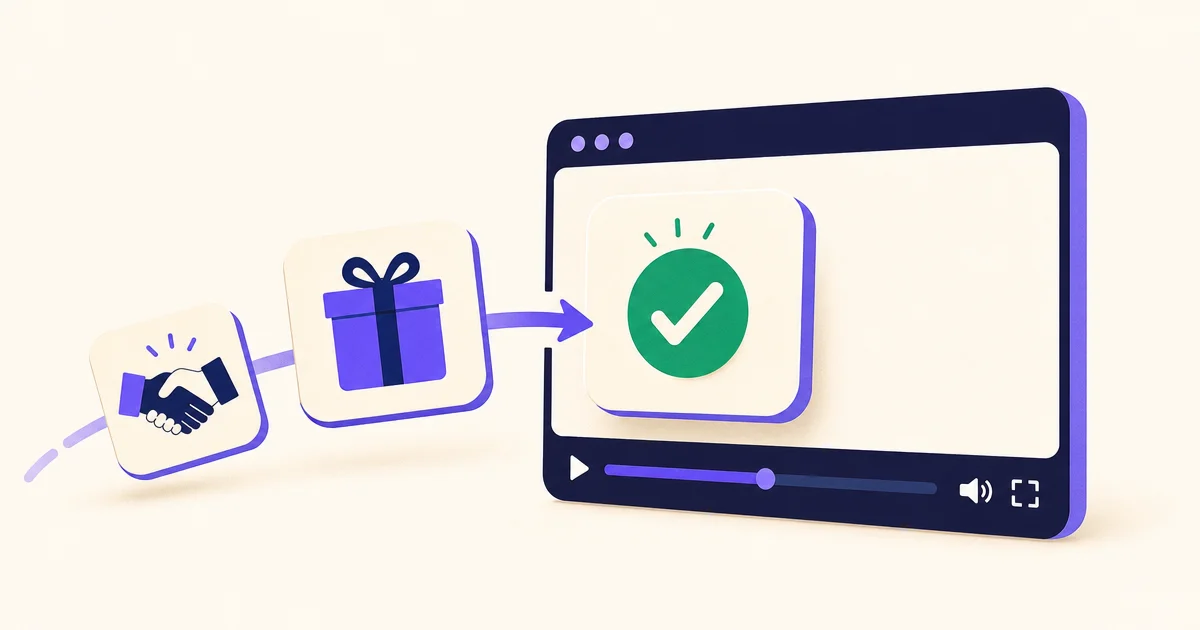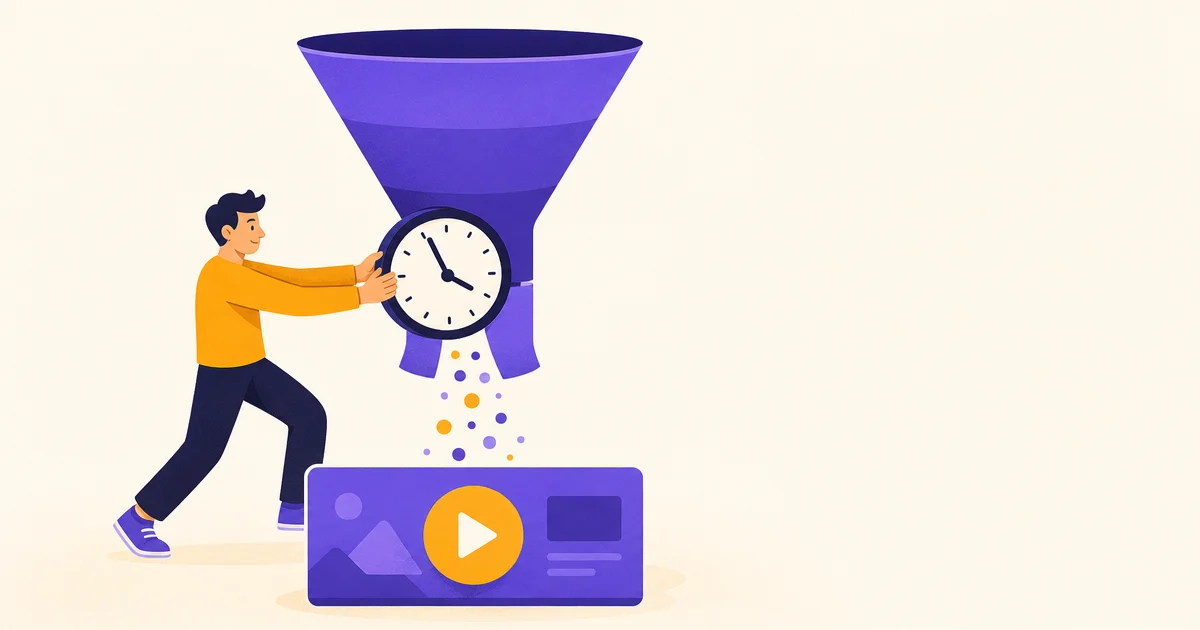

A missed discovery call is not just an empty slot. It is prep time gone, a seat a motivated buyer could have taken, and a follow-up that, on the numbers, turns at best one no-show in a hundred into a sale. Personalized video does not reduce that math. It removes it, because there is no slot to miss in the first place.
What discovery call no-shows actually look like
The number that shows up across B2B scheduling guides looks like a warning line, not a comforting average: above 20 percent of missed meetings, something in the process is broken. That is the threshold RevenueHero, a B2B scheduling platform, points to in its own benchmark data. Detectour, a French appointment-setting agency, lands on a similar number after reviewing the research in early 2024.
Below that line there is still room to breathe, but it narrows fast once video enters the picture. A discovery call held over video, now the default rather than the exception, no-shows five to ten times more often than an in-person meeting, according to the research Detectour cites. Timing matters too: the further out a meeting sits from the moment it was booked, the weaker the prospect’s commitment gets. Past four weeks, Detectour puts the no-show rate above 30 percent.
| Benchmark | Number | Source |
|---|---|---|
| Normal no-show rate (video calls) | 10 to 20% | Detectour, 2024 |
| Warning threshold | Above 20% | Detectour · Agence Nova |
| Video vs in-person multiplier | 5x to 10x | Detectour, 2024 |
| Booked more than 4 weeks out | Above 30% no-show | Detectour, 2024 |
| Median no-show, B2B panel (US) | 13.5% | RevenueHero, 2025 |
| Top 10% of the sector | 5.5% | RevenueHero, 2025 |
None of this is a US-only or France-only story. RevenueHero pulled eighteen weeks of meeting data from its customer base in August 2025 and landed on a median no-show rate of 13.5 percent. Even the top 10 percent of that panel only gets down to 5.5 percent. Nobody hits zero.
What a missed call really costs
An empty calendar slot is the visible part. Before the call, there is prep: reading through the qualification answers, looking up the prospect’s business, blocking the next slot around this one. None of that comes back when nobody logs on.
Then there is what the meeting cost to book in the first place. A B2B meeting is not free to secure: Agence Nova puts the figure at 70 percent of booked meetings requiring more than one follow-up touch, by phone, email or LinkedIn. A discovery call that falls through does not just erase thirty minutes of calendar. It erases several days of prospecting that had finally paid off.
Chasing those no-shows rarely closes the gap. Detectour tracked more than 500 missed appointments across different follow-up methods and found that reaching back out to 100 no-shows converts one sale at best, against ten sales out of 100 fresh prospects contacted for the first time. Following up with someone who already skipped one meeting takes the same sales time as opening a new conversation, for a tenth of the return.
Take a solo coach running, say, ten discovery calls a week. At a 15 percent no-show rate, that is roughly one and a half calls a week, or six a month, that led nowhere, on top of the ones who show up late or already checked out. Six slots a genuinely motivated buyer could have filled instead.
Why reminders, SMS and deposits plateau
The standard fixes work, and it would be dishonest to say otherwise. A reminder 24 hours out, another one an hour before, a text instead of an email, a small deposit collected at booking: each one moves the number. RevenueHero’s own data puts a solid reminder cadence at roughly a 28 percent reduction in no-shows, with SMS adding another 10 to 20 percent on top when it is layered in.
The problem is not that these tools underperform. It is that they plateau. Even the best-equipped 10 percent of the companies in RevenueHero’s dataset, running reminders, SMS, a recognized sender domain and upfront qualification all at once, still land at 5.5 percent. The very top performers stop at 3.1 percent. RevenueHero says as much itself: there is no single fix that gets a sales team to zero no-shows. That floor is not a training gap or a tooling problem. The floor is structural: the meeting is still tied to a fixed hour on somebody else’s calendar, and that person can always find a better reason not to be there that day.
The same ceiling shows up in webinars, a format built the same way. A closer look at webinar versus video-funnel attendance finds a comparable gap between registering for a live session and watching something sent after a quiz. Fixing a shared time is the weak point either way.
A deposit shifts the problem rather than solving it. It turns a free no-show into a paid one, which discourages some of the fence-sitters, but it adds nothing to the number that actually matters to a coach: how many genuinely qualified people hear the pitch. Someone who pays a small deposit and skips the call three weeks later has lost a small deposit. They have not become a client.
Personalized video: the meeting that cannot be missed
The mechanics behind a video funnel flip the order of operations. Instead of trying to get a prospect to show up at a specific hour, the funnel sends them what they would have shown up for, on their own schedule. A visitor answers a qualification quiz first, five to fifteen questions, presented on video by the coach themselves. Their answers drive an automatically assembled personalized video, cut from real filmed footage rather than an avatar or AI-generated clip. It typically reaches them within a couple of hours of finishing the quiz, and they watch it whenever suits them: between meetings, on a commute, late at night. There is no slot to miss, because there was never a slot to honor.
The quiz step is doing real work, not padding the funnel. It performs the same pre-qualification a discovery call usually does live, except before the coach spends a single minute on it: someone who drops off after three questions was never close to buying, and their absence costs nothing. Someone who finishes the quiz has already put in real time. Commitment made through action predicts what happens next far better than a prospect’s stated good intentions on the phone, a pattern social psychology has measured in detail. The video then closes the reciprocity loop the quiz opened: fifteen minutes of attention, filmed for this one person, earns a more engaged response than a generic ad ever will.
The pattern is not unique to VideoFunnel. Forbes contributor Jodie Cook described, in a February 2026 piece, how coaches are swapping a full sales call for a five-minute personalized video to sell premium offers, without ever picking up the phone. Loom, a company built around asynchronous video, points to a similar effect from the other direction: in late 2024, it credited a personalized video added to outreach sequences with lifting cold email reply rates by 19 percent for its customer Intercom. Different products, same mechanism: a video made for one specific person gets watched differently than a generic message, and it never needs anyone’s agreement on a time.
What this changes in a coach’s calendar
A calendar built around discovery calls runs on a bet: every blocked slot is a bet that the person will actually show up, in the frame of mind a real conversation needs. That bet fails one time in five, sometimes more, and no reminder stack changes that ratio by much.
With a video funnel, the bet changes shape. The prospect is not reserving an hour anymore. Finishing the quiz sets a video in motion that will be waiting for them, ready, whenever they choose to press play. A no-show turns into a viewing delayed by a day or two rather than a slot lost for good, and the calls that do land on the calendar are with people who have already seen the core of the pitch and are asking, live, the one or two questions that were still open. The meeting itself no longer needs to happen for the sale to move forward. It just needs to be watched.
Frequently asked questions
What counts as a normal no-show rate for a discovery call?
Somewhere between 10 and 20 percent, with 20 percent as the point where RevenueHero’s own data says something is broken. The median across its customer base sits at 13.5 percent. Video calls push that number up further: Detectour’s review of the research found five to ten times more no-shows on video than in person.
Why do video meetings get more no-shows than in-person ones?
Because clicking a calendar link takes far less commitment than physically getting somewhere. An in-person meeting forces logistics and a cleared schedule, which already filters out the least motivated people. That weak initial commitment also decays with time: Detectour found no-show rates climbing past 30 percent once a meeting sits more than four weeks out.
Is it worth following up with people who no-show?
A little, but not at the expense of new prospecting. Detectour’s study of over 500 missed appointments found that following up with 100 no-shows produces one sale at best, against ten sales from 100 freshly contacted prospects. A quick call to the most promising few, and one or two emails for the rest, beats chasing everyone equally.
Does a booking deposit fix the no-show problem?
It cuts down on free no-shows, but it does not touch the underlying cause: the meeting is still tied to a fixed hour the prospect can decide to skip, deposit or not. Even the best-run scheduling stacks, combining reminders, SMS and deposits, never drop below 3 to 5 percent no-show, according to RevenueHero’s data.
Can a personalized video actually replace a discovery call?
For most of the qualifying and pitching work, yes. The prospect gets a video built from their own quiz answers and watches it on their own schedule, with no shared time slot required. If a live call still happens afterward, it starts with someone already informed rather than a cold introduction.