A video sales letter (VSL) is a video that replaces the sales page: one complete pitch, filmed or read, that walks the prospect from problem to offer. It sells when the viewer recognizes themselves in the first thirty seconds and stays until the price. People close it when it talks to everyone, and therefore to no one.
What a video sales letter is, and where it comes from
The name says it all: a sales letter, on video. The sales letter is an old direct-marketing format, those twelve-page mailings that sold subscriptions and methods through the post. Copywriters knew its structure by heart: a hook, identification of the reader, their problem stated bluntly, a new mechanism that explains it, proof, the offer, the guarantee, the call to act. The video sales letter is that structure moved to the screen, and it kept the skeleton.
American copywriter Jon Benson claims to have invented the format. He tells of recording, shortly after 2007, an "ugly" video with no pictures, only black text and red words he read aloud, to sell a weight-loss program. By his account, the video sales letter he wrote and voiced for "Truth About Abs" brought in $40 million, and the format now generates more than $12 billion a year across industries. Those are his numbers, and nobody audits them. But they tell the essential story: the format was born among info-product sellers, to sell methods to people they would never meet, and it still rules there.
Why a video rather than a page? Because you cannot skim it. Roy Furr, another copywriter, wrote as early as 2015, answering those who announced the format's death, that the video sales letter controls attention. It imposes the order of the argument. A page reader jumps to the price; a video viewer, if they stay, hears the argument in the order it was built. The whole bet lives in that "if they stay".
Length: what people believe, and what 13 million videos say
Ask ten course creators the right length for a video sales letter and you will get ten confident answers, none of them sourced. One French guide for solo entrepreneurs suggests 10 to 15 minutes for a $50 product, 20 to 30 minutes for a $500 course, up to 45 minutes for a $2,000 program. It is coherent, plausible, and backed by nothing. AWAI, the American copywriting school, is more honest: there is no rule for length, only elements to include.
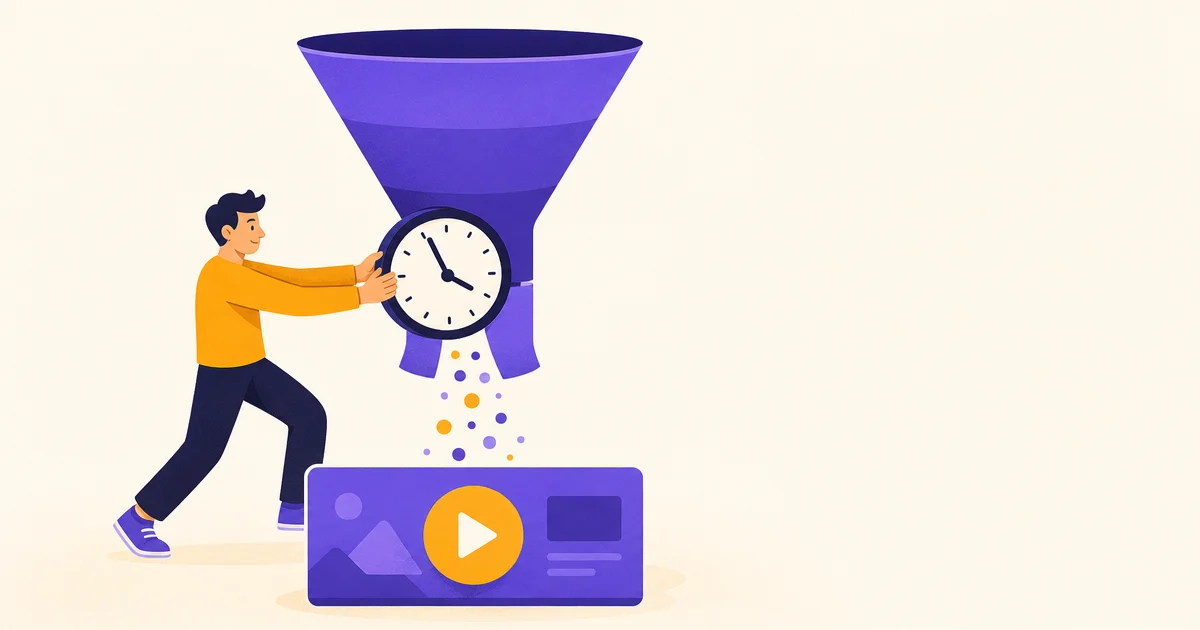
There is data, though. Wistia analyzed more than 13 million videos hosted on its platform and 79 million hours of viewing for its 2026 State of Video report. Videos under one minute hold an average 52% of their length: perfect for awareness, useless for selling. The window Wistia associates with conversion and nurturing runs from 5 to 30 minutes. Past 30 minutes, engagement falls by 11 points. And videos of 30 to 60 minutes are the ones that generate the most clicks on calls to action, which is no contradiction: the people who stay an hour are the ones who were going to buy.
Read those numbers for what they are: averages over millions of videos that have nothing in common. They do not say 20 minutes beats 12. They say a viewer will give between five and thirty minutes to a video that speaks to them, and will drop any video that does not, at minute two as readily as at minute forty. The right length for a video sales letter is however long the viewer feels the video is about them. The rest of this guide explains how to create that feeling, and then why a single video never manages it for everyone.
The anatomy of a video sales letter that sells
The skeleton has not changed since the printed letter, and there is no reason to reinvent it. What separates a video that sells from a decent one is the quality of each floor, not the invention of a new one.
The hook and the identification: the first thirty seconds
The viewer must know within thirty seconds that this video is for them. Not for coaches in general, not for people who want to lose weight: for them, in their situation, with their obstacle. The best hooks name the precise symptom the prospect is living this morning. "You launched your program six months ago, you have thirty members and you still answer every message yourself" beats "You want to grow your coaching business". The first sentence sorts. It drives away those who are not concerned, and that is fine: they would not have bought.
Then comes the problem, stated bluntly, followed by what copywriters call the mechanism: the reason, new to the viewer, that explains why they have not succeeded yet. That mechanism is the intellectual heart of the video. If it is right, the viewer thinks "that is exactly it" and stays. If it is generic, they think "I have heard this before" and close.
The proof, the offer and the call
Proof is the results of other people who resemble the viewer. Not the most impressive: the closest. A coach selling a program to therapists shows a therapist, not a SaaS founder who did ten times more. The offer then presents itself as the logical consequence of the mechanism: since the problem comes from there, here is what fixes it, and here is what it contains. The price comes late, once the value is established. The call to act, finally, is single and concrete: a button, a date, a seat.
Wistia also observes that lead forms and calls to action placed at the end of a video are the most clicked interactive elements, while being the least used. The end of the video is the most valuable spot in the funnel. The viewer still has to get there.
The one people close: the three reasons for closing
Every course creator who has looked at the retention curve of their video sales letter knows the shape: a cliff in the first minute, then a steady slope, then almost nobody left when the price arrives. Production has nothing to do with it. The best-edited videos fall too. There are three causes, and none of them gets fixed in the edit.
The first is the average prospect. A single video necessarily addresses a composite viewer: the beginner and the advanced, the one short on time and the one short on method, the one who already bought three courses and the one who never bought anything. To speak to all of them, it speaks to a character who does not exist. Every real viewer therefore hears, at regular intervals, sentences that do not concern them. And at each sentence that does not concern them, some of them close.
The second is fear of the face. The video sales letter was born ugly, black text on a white background, and many have stayed that way, out of habit or shyness. Today the temptation of the synthetic voice and the generated presenter adds to it. That is a misreading of the market. Gartner measured in 2024, among 5,728 consumers, that 64% would prefer companies not to use AI in customer service, and that 53% would consider switching providers if they did. A Harris Poll survey for the 4A's and Infillion, in 2026, found 78% of respondents uncomfortable with ads made with AI. The prospect buying a program wants to see the person who will run it. A faceless video sales letter asks them to trust a voice.
The third reason is the deepest: the video arrives before the question. The prospect clicks an ad or a link, and a person starts talking about their problem without having asked them anything. It is the salesperson unrolling the pitch to someone who has not yet opened their mouth. Even when right, the argument lands as an intrusion, because it was not earned. The viewer has invested nothing. So they have nothing to lose by closing.
Closing is a problem of adaptation, not editing
Take the three causes again. The average prospect, the missing face, the video that arrives before the question. None of them is fixed by a better editor or a better script. They share a root: one video, written once, for everyone who will click. As long as the video sales letter is a single object, it will be closed by everyone it does not describe.
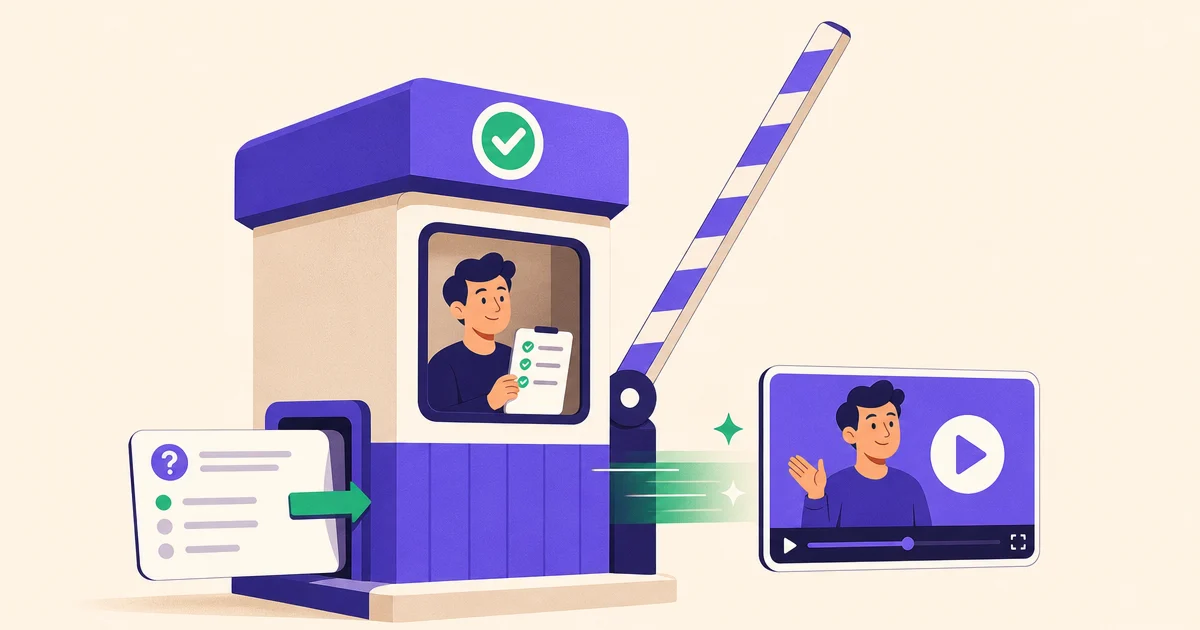
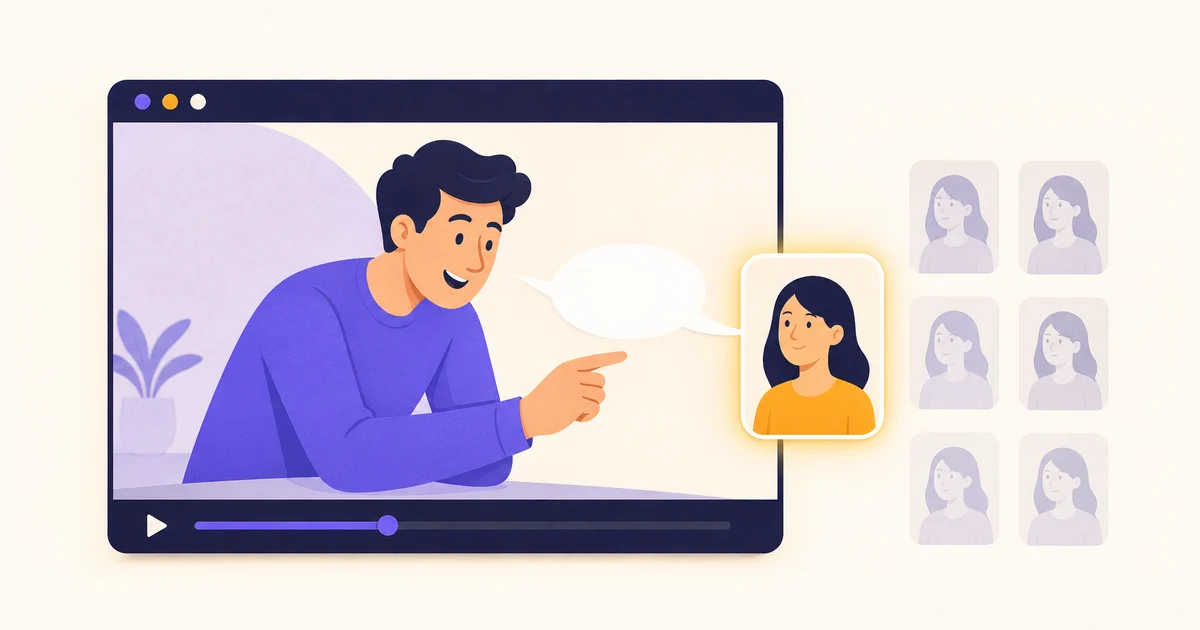
The video funnel reverses the order. The prospect starts by answering a questionnaire of 5 to 15 questions, asked on video by the seller themselves: where they are, what they have tried, what blocks them, what they aim for, by when. Then they receive a personalized analysis video of 10 to 15 minutes, assembled automatically from their answers. The seller is on camera, for real, with no avatar: they recorded about twenty segments, an opening per profile, an explanation per obstacle, a recommendation per goal, and the system composes for each prospect the video that matches their case. Five questions with three answers each are enough to produce hundreds of different combinations.
Each of the three causes of closing disappears. The average prospect no longer exists: the video talks about what this person answered, in their words. The face is there, the seller's, the one who will run the program. And the video arrives after the question, not before: the prospect gave five minutes and fifteen answers, they are waiting for their analysis, they have something to lose by closing. The video has become the answer to a request they made themselves.
BodyTime, which sells online fitness programs, built its VideoFunnel around 14 questions and a 13-minute analysis video. Its prospects watch it for 13 minutes on average, in other words to the end, and the funnel converts 2.5 times better than its previous setup on equal traffic. Thirteen minutes of attention is exactly what the classic video sales letter promises and almost never gets. The difference is not in the edit. It is in the fact that the video talks about the viewer, because the viewer talked about themselves first.
| Classic video sales letter | Personalized analysis video | |
|---|---|---|
| What it knows about the viewer | Nothing: it addresses an average profile | Their 5 to 15 answers, given before the video |
| Who speaks | Often a voice-over, text, sometimes a synthetic voice | The seller, on camera, the one who will deliver |
| When it arrives | Before any question: on click | After the prospect has described their situation |
| What follows | A button, then nothing | Follow-ups, booking or payment, CRM |
We described the full setup in our guide to the video funnel, and its application to premium coaching in selling high-ticket coaching without discovery calls.
"My video sales letter already converts, why complicate it?"
It is the most serious objection, and it is right on one point: a good video sales letter converts. It converts the viewers who resemble the average prospect it was written for. The question is not whether it sells, but how many people it lost before the price, and who they were. Look at your retention curve. Everyone who closed between minute two and minute ten had clicked, so they had an interest. They did not leave because they were not concerned. They left because the video, at that precise moment, was not about them.
And nothing forces a choice. A personalized analysis video keeps everything good about the classic format, the control of attention, the structure, the proof, the offer, and serves it to each prospect in the version that concerns them. The script you spent months refining becomes about twenty segments instead of one monologue. The comparison with the webinar, the other big sales format for course creators, leads to the same conclusion: we laid it out in webinar funnel vs video funnel.
The video that sells is the one about the person watching
Back to the printed sales letter. The great copywriters said they wrote to one person, sitting across from them. It was a figure of speech: the letter went out in a hundred thousand identical copies. The video sales letter inherited the figure of speech and the limit. It talks to an imaginary person, and every real viewer measures the gap between that person and themselves.
The video funnel finally keeps the promise. The prospect speaks first. The seller, on camera, answers them, about their case, with their situation and their goal, for the ten or fifteen minutes a viewer will give to someone who is talking about them. The video that sells is not the shortest or the best edited. It is the one people do not close, because they are in it.
Frequently asked questions
What is a video sales letter?
A video sales letter is a video that replaces the sales page: a complete pitch, in a fixed order, that walks the prospect from their problem to the offer. The format comes from the direct-marketing sales letter and was popularized among American info-product sellers; copywriter Jon Benson claims to have created it.
How long should a video sales letter be?
There is no proven ideal length. Across 13 million videos, Wistia (2026 report) places the conversion window between 5 and 30 minutes and observes an 11-point engagement drop past 30 minutes. The length a viewer accepts is however long the video is about them.
Why do viewers close a video sales letter before the end?
For three reasons that no edit fixes: the video addresses an average prospect who does not exist, it hides the face of the person selling, and it arrives before the viewer has asked their question. A personalized analysis video, sent after a questionnaire, removes all three.
What is the difference between a video sales letter and a personalized analysis video?
A video sales letter is single and written for everyone. A personalized analysis video is assembled for each prospect from their answers to a questionnaire, with the seller on camera commenting on their case. At BodyTime, such a 13-minute video is watched to the end and converts 2.5 times better on equal traffic.