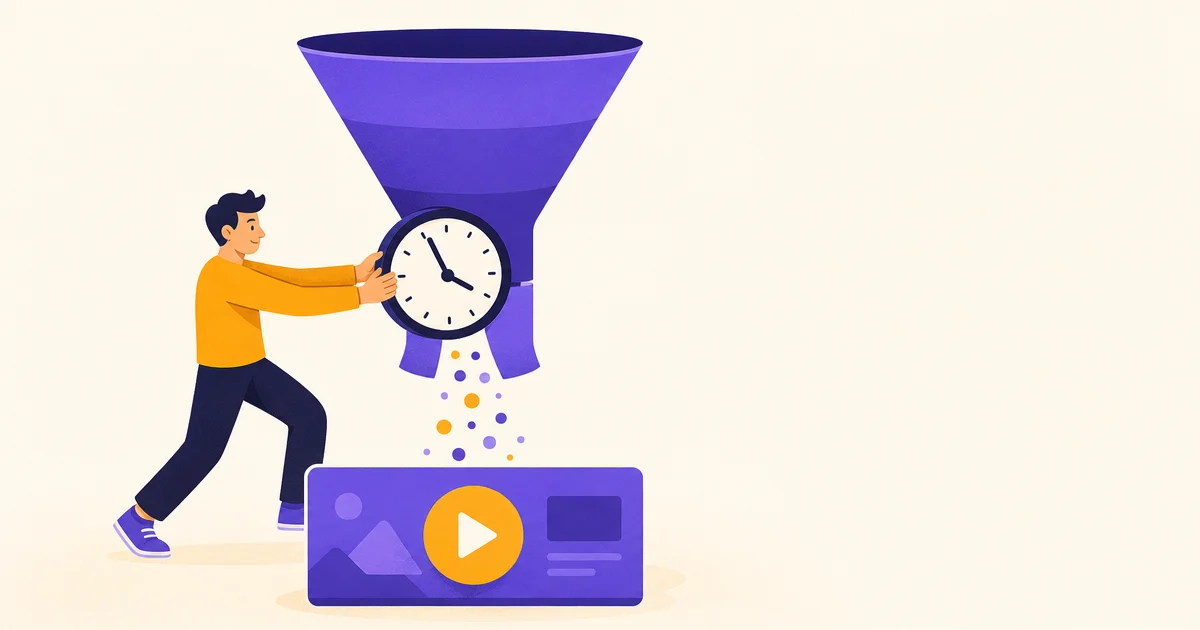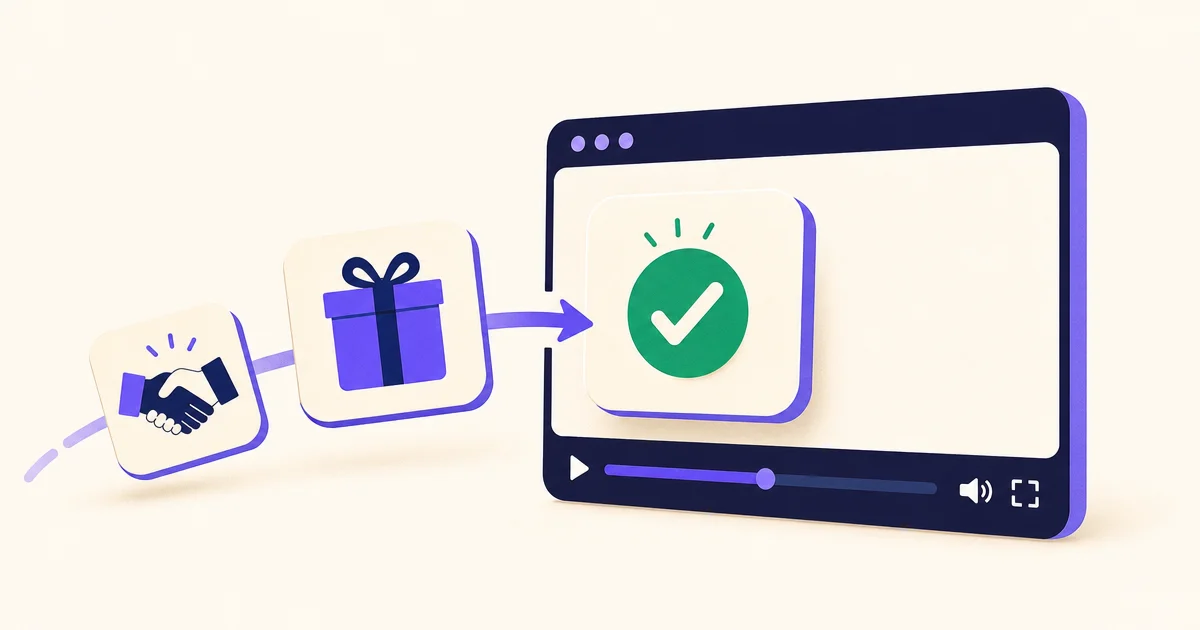
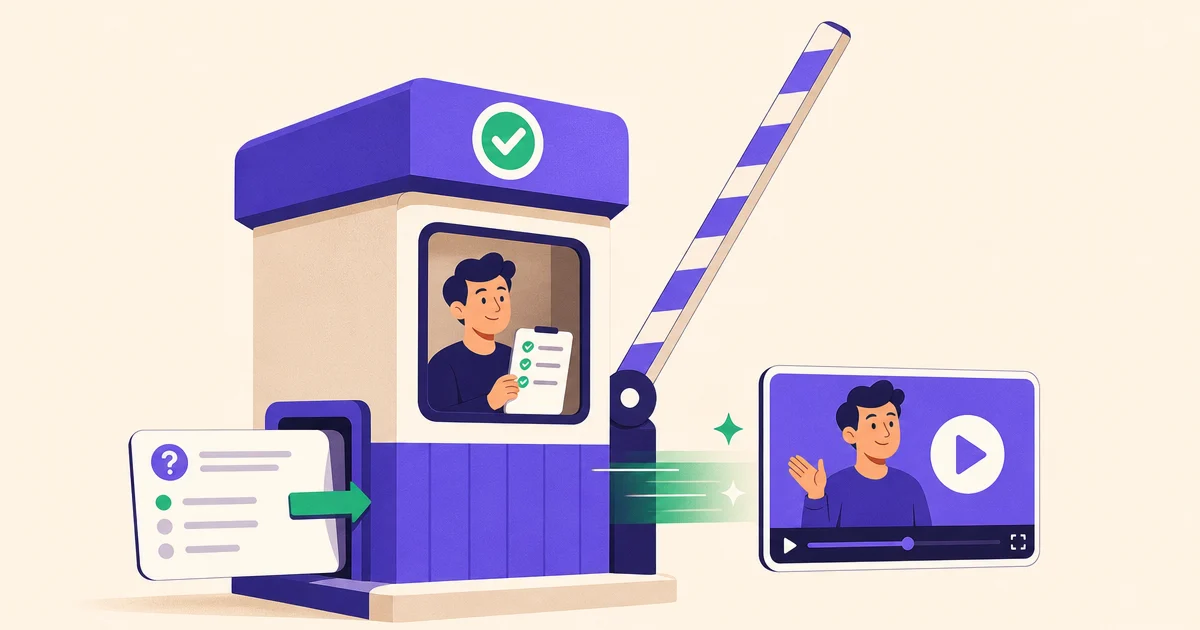
Yes, you can sell high-ticket coaching without discovery calls, on one condition: something else has to perform the call's three functions, qualifying the prospect, personalizing the answer, building trust. That's what a video funnel does: a quiz that diagnoses, then a personalized analysis video that makes your argument for you.
What discovery calls really cost
The standard high-ticket coaching model fits on one line: content, a booking link, discovery calls. That tollbooth has numbers, and the appointment sellers publish them themselves. Leads Now (2026), an agency that books sales calls for coaches, reports 55 to 80% show rates on booked calls and 12 to 38% close rates depending on offer maturity. A booked call costs $150 to more than $2,000 apiece, depending on program price.
Translate those ranges into a calendar. Twenty booked calls in a week, 45 minutes each: fifteen hours blocked. At a 70% show rate, fourteen conversations actually happen. At a 25% close rate, three or four sales. The rest of the time went to no-shows, tire kickers and "let me think about it". Every hour on the phone is an hour you don't bill.
Delegating doesn't remove that cost, it relocates it. A closer takes between 10 and 20% of the ticket according to ClosR (2026): at 15%, a $5,000 sale hands $750 to someone else. On every sale. Forever. The discovery call isn't free; it's the most expensive line in your funnel.
The call's three functions, and how to replace them
If the call survives those numbers, it's because it performs three real services. It qualifies: ten minutes of questions reveal whether the person is at the right stage, motivated, able to afford the program. It personalizes: the prospect hears an answer to their situation, not a generic pitch. It reassures: a voice, a face, someone listening. Nobody pays $5,000 to a PDF.
So the goal isn't to eliminate those three functions. It's to get them out of your calendar. Buyers already want this: 67% of B2B buyers prefer a rep-free buying experience, according to a Gartner survey of 646 buyers run in late 2025. A mandatory appointment works as a filter in reverse: it screens out busy people first, which is to say the ones who can afford you.
What's left is to run the call without the call.
The no-call mechanism: a quiz, then a video that argues
A video funnel runs the three functions in the same order as the call, without a calendar. Qualification first: a quiz of 5 to 15 questions, each asked on camera by the coach, collects the prospect's situation, goal and sticking point. The format holds people remarkably well in this profession: 44.9% of people who start a quiz in coaching leave their contact details (Interact, 2026). Every answer feeds what comes next.
Personalization second, and it's the engine. The answers assemble a personalized analysis video of 10 to 15 minutes, edited from segments you actually filmed and delivered about two hours after the quiz. The prospect hears your read on their situation, your method applied to their case, your voice. The discovery call's three services, delivered while you're in session with a paying client.
Trust, finally, is built through the same levers as on the phone. The prospect invested time in the quiz, receives ten minutes prepared for them, and voluntarily watches a complete argument: commitment, reciprocity, conviction, the mechanisms our piece on persuasion principles in marketing breaks down. That's the definition of a video funnel: the quiz opens the door, the personalized analysis video makes the sale.
The method, in five steps
The setup takes about a week of real work, filming included. In order:
- Clarify the offer and its price: one video can't sell three programs at once.
- Write the quiz: 5 to 15 questions covering situation, goal, sticking point and budget. They're the ones you already ask on calls.
- Script the segments: one analysis per typical profile, one answer per recurring objection, one offer presentation. About twenty segments covers hundreds of combinations.
- Film: two to four hours, a recent smartphone, decent lighting. Natural beats polished.
- Wire up what follows: automated follow-ups, direct payment, or a booking step for your top tier.
The step that decides everything is the third, and you've already half written it. Your past discovery calls are the draft: the questions that keep coming back, the objections you've heard a hundred times, the sentences that trigger the "huh, I never saw it that way". Filming those answers once turns fifteen weekly phone hours into an asset that works nights.
"High ticket sells through human conversation"
The objection is healthy, and half right. Yes, a $5,000 or $15,000 commitment demands human speech, a face, a credible analysis. No, nothing requires that speech to be live, carved out of your calendar and repeated identically fifteen times a week. In the personalized analysis video, you are the one talking, to that specific person; you just say each thing once per segment, and the edit recomposes the conversation for every viewer.
Look at what each format gets from a prospect's attention. Webinars gather a crowd, but at a fixed hour and with a collective pitch: our webinar funnel vs video funnel comparison puts the attendance numbers side by side. The personalized video gets watched when the prospect is free, and gets watched through. BodyTime, a fitness program company running on VideoFunnel, holds 13 minutes of attention before its offer even appears, with conversion multiplied by 2.5 on the same traffic. That figure belongs to that account, not to an average; it shows what a well-built asynchronous conversation can earn.
And at the very top of the range, the call doesn't vanish: it changes nature. A video funnel can end in a direct payment or a booking step. Whoever books at that point has answered the quiz, watched your analysis, seen your price. They're not coming to discover anything. They're coming to close, and the 45-minute call becomes a short exchange between two people who already agree on the essentials.
Your calendar is no longer the ceiling
The profession is filling up. 122,974 coaches counted worldwide, 15% more than in 2023, in a $5.34 billion market, according to the ICF global study conducted by PwC in 2025 with more than 10,000 practitioners. All of them get the same 168 hours a week. As long as selling requires an appointment, your revenue is capped by your calendar, then trimmed by no-shows and commissions.
A video funnel decouples conviction from the calendar. A hundred prospects can receive a hundred different analyses in the same week, filmed once, while your hours go to paying clients. Next time a prospect hesitates over your booking link, ask the question that matters: what would they be watching, right now, if your discovery call existed as a video?
Frequently asked questions
Can you sell high-ticket coaching without discovery calls?
Yes, as long as something else performs the call's three functions: qualify, personalize, reassure. A video funnel chains them without a calendar: a quiz collects the prospect's situation, then a personalized analysis video of 10 to 15 minutes answers them, with your face and your voice, while you coach.
What replaces the discovery call in practice?
A qualification quiz followed by a personalized analysis video. The quiz asks the questions you used to ask on the phone; the video, assembled from segments you actually filmed, delivers your analysis and your offer about two hours later. The prospect can then pay directly or book a short closing conversation.
What close rate do discovery calls actually get?
The ranges published by the industry itself run from 12 to 38% closed on calls held, with 55 to 80% show rates on booked appointments (Leads Now, 2026). Add a closer's commission of 10 to 20% of the ticket (ClosR, 2026), and the real cost of a phone sale far exceeds what the calendar shows.
Should you keep a call for programs above $10,000?
A video funnel leaves the choice open: direct payment or a booking step at the end of the journey. For the most demanding programs, many coaches keep a short call, but its nature changes. The prospect arrives qualified by the quiz and convinced by the video: it's no longer a discovery call, it's a closing one.