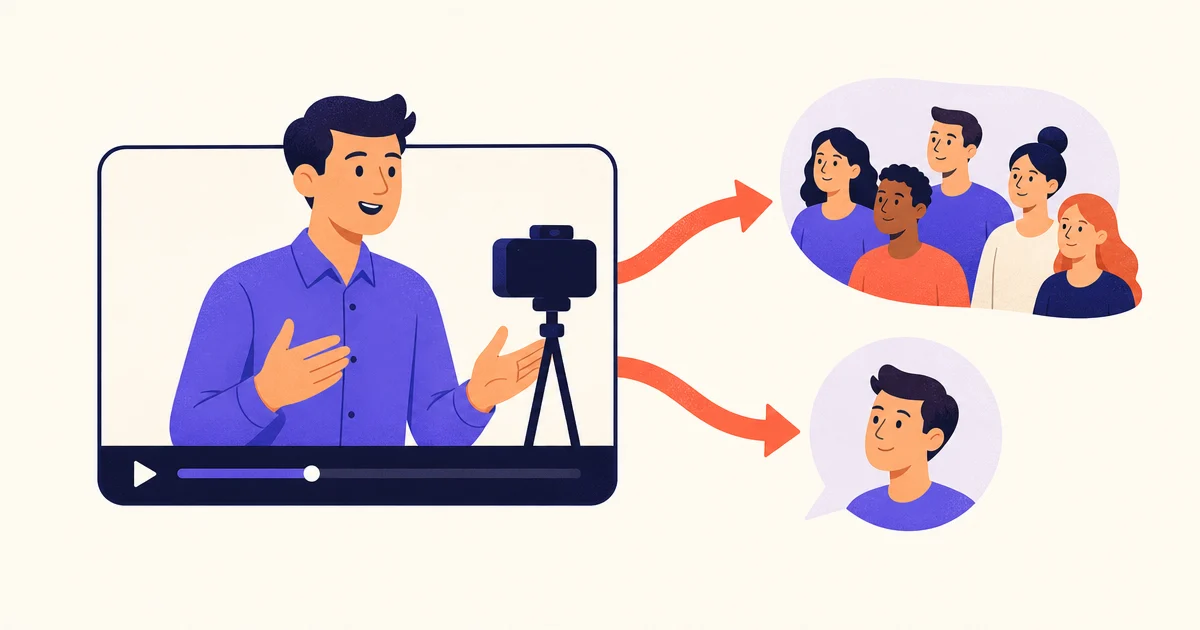
Online commerce spent twenty years removing the salesperson, then discovered the salesperson was the conversion. The two fastest-growing formats, live shopping and clienteling, are two ways of rehiring them: one in front of a crowd at a fixed hour, the other one-on-one. A video funnel is the third, with no time slot and no headcount.
The salesperson we removed
Look at what ecommerce stripped out of the act of buying over twenty years. The salesperson who asks two questions. The one who pulls three items off the shelf instead of thirty. The one who says "not that one, for you, this one." All of it was replaced by a catalog, filters and a button, in the name of an economic truism: a salesperson costs money, a page costs nothing.
The truism quietly flipped. Customers never stopped asking: 79% of consumers prefer dealing with a human over an AI agent, according to SurveyMonkey in December 2025, across 2,017 adults. And the two online selling formats growing fastest in 2026 share a trait their promoters rarely lead with: in both, somebody sells.
Proof one: live shopping
Live shopping is a seller on camera, a product in hand, and buyers ordering while they talk. The format was born in China, where it accounts for close to 60% of ecommerce according to eMarketer, against roughly 5% in the United States. But the American curve is climbing fast: $14.64 billion in sales in 2025, up nearly 50% in a year, with 21.5% more buyers.
What stands out in the numbers isn't the volume, it's the yield. McKinsey, which surveyed 2,400 consumers across four continents, reports conversion rates up to ten times higher than conventional ecommerce. Ten times. Same products, same prices, one variable added: a human who shows and argues, live.
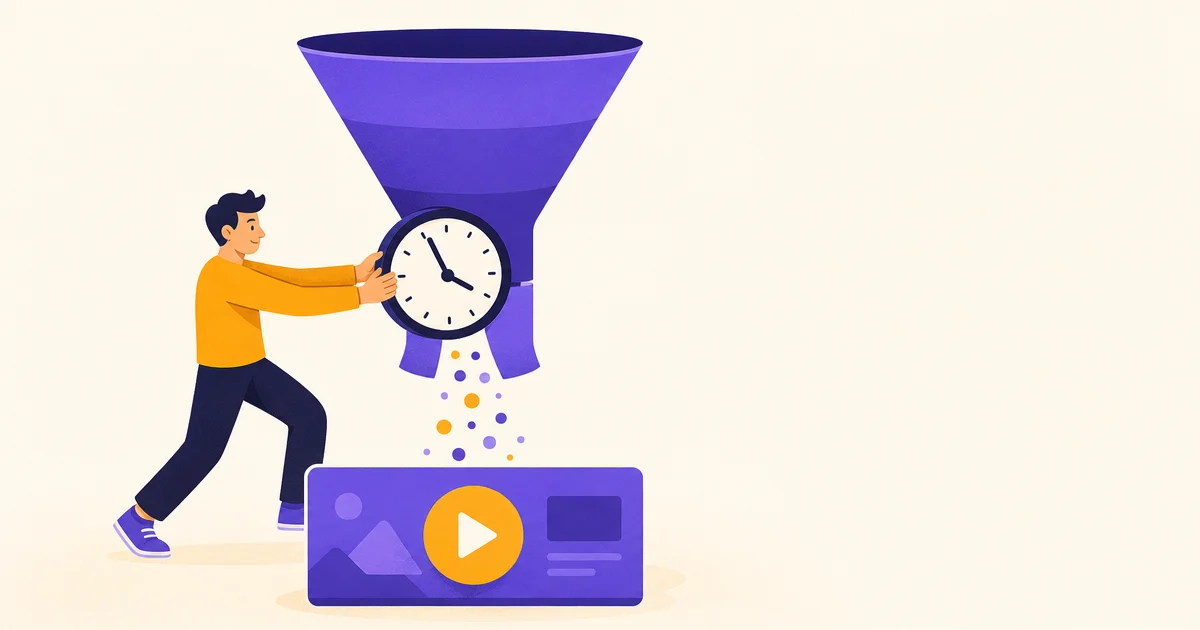
The format has a limit, though, and McKinsey names it: timing. It's the first barrier cited by non-buyers, 32% in the US, 29% in Europe. A live stream requires you to be there at 8pm. And eMarketer finds 43% of American adults say they aren't interested in the format. The seller converts at ten to one; the customer still has to show up at the hour they speak.
Proof two: clienteling
Clienteling is the salesperson's other comeback, from the other end: not one human in front of a thousand customers, but one human for one customer. A store associate who messages their clients, remembers their purchases, suggests the new arrival that fits them, follows up after a hesitation. Long reserved for luxury, it picked up tooling and spread to apparel, beauty and home.
Its numbers tell the same story as live, at a different scale. According to the 2025 benchmark report from Tulip, a specialist vendor, clienteling communications convert at 11% on average, against 2 to 5% for brand communications sent to everyone; clienteled customers spend 63% more per month, and orders from clienteling carry a 194% higher average value. A message from a person, to a person, sells five times better than the same message sent by the brand to all.
The limit here is arithmetic. An associate can only follow a finite number of customers, and every additional customer costs human time. Clienteling is the salesperson in their most effective and least scalable form: it only grows in proportion to the salaries you're willing to pay.
What the two prove together
Put the two curves side by side. Live shopping proves a seller who shows and argues converts at ten to one, but demands a time slot. Clienteling proves a personal message converts at five to one, but demands headcount. Commerce has therefore rediscovered, by two independent routes, the same thing: the salesperson wasn't a cost you could remove, it was the conversion variable.
What it hasn't solved yet is the logistics. How do you give every visitor the live seller, face and argument included, and the precision of clienteling, addressed to their situation, without a schedule and without hiring an associate per customer? That problem is the real subject of 2026. The two rising formats are each half of it.
The salesperson recorded once, delivered to each
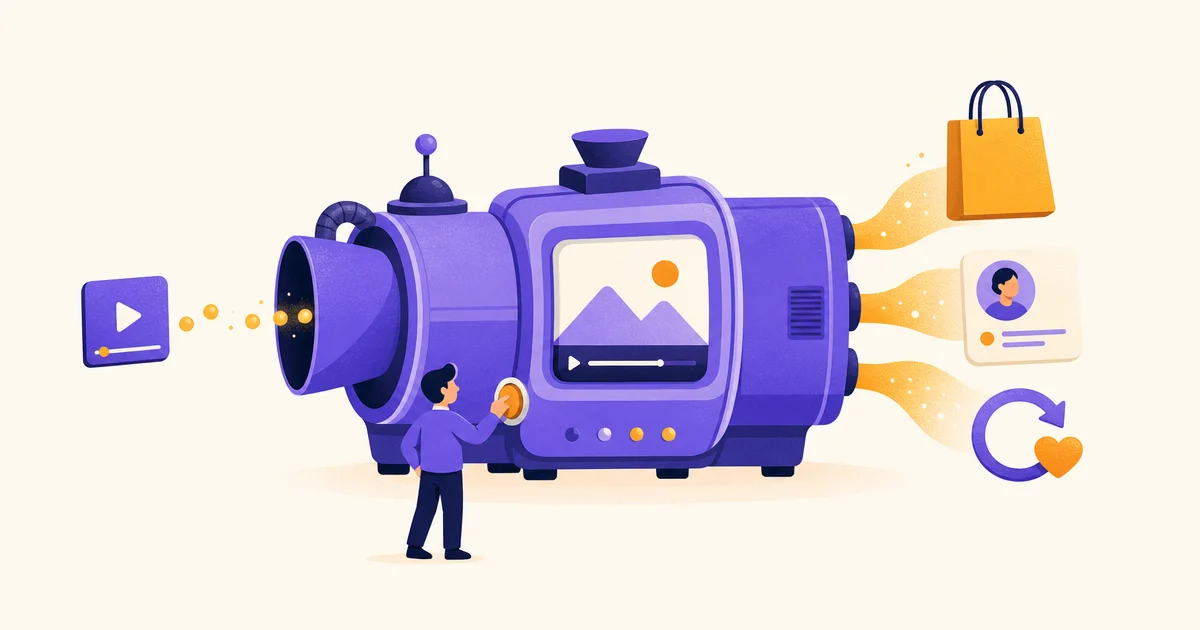
A video funnel takes both halves and removes both limits. From live, it keeps the essential: the seller on camera, actually filmed, showing and arguing. From clienteling, it keeps the principle: an answer to this customer, built from what they said. The mechanics run in two steps. A 5-to-15-question quiz collects the visitor's situation; their answers assemble a personalized analysis video of 10 to 15 minutes, edited from about twenty segments filmed once, and delivered about two hours later.
The time slot disappears: the video gets watched at 11pm or on Sunday morning, whenever the customer is free, which settles McKinsey's barrier number one without removing the human presence. The headcount disappears too: a five-question funnel with three options each produces hundreds of combinations from those twenty segments, and a hundred prospects receive a hundred different analyses in the same week without an associate picking up a phone. The seller was filmed once. They work for everyone.
What that recorded seller earns is measured the same way as live and clienteling. BodyTime, a fitness program company, holds 13 minutes of attention per prospect before its offer even appears, with conversion multiplied by 2.5 on the same traffic. Anna Velazia, a jewelry and lithotherapy brand, made her video funnel her top acquisition channel, with 70% of the ad budget and 3x the ROAS. Those results belong to those two accounts; they show what an online store becomes when you give it back its salesperson. The head-to-head with the synchronous format is in our webinar funnel vs video funnel comparison.
Automation didn't kill the salesperson, it misplaced them
The dominant story says technology replaces the human. Live shopping and clienteling say the opposite: the winning formats are the ones putting the human back. What automation should have taken over is the backstage, the editing, the delivery, the follow-up, pushing answers into the CRM. What it took instead was the stage. And the stage has been empty for twenty years.
A video funnel is the most direct way to put everyone back where they belong: the machine behind, the seller in front, and every customer receiving, at the hour that suits them, the pitch a good associate would have given them in store. For an online store, the full journey from ads to retention is laid out in our piece on the video funnel for ecommerce. The salesperson is back. This time, nobody has to be there at 8pm to hear them.
Frequently asked questions
What is the conversion rate of live shopping?
McKinsey reports conversion rates up to ten times higher than conventional ecommerce, from a survey of 2,400 consumers across China, the US, Europe and Latin America (2023). Its first barrier is timing: 32% of American non-buyers and 29% of Europeans cite the time slot as a blocker, and 43% of American adults say they aren't interested (eMarketer, 2026).
What is clienteling and what results does it get?
Clienteling is the one-on-one relationship between an associate and their customers: personal messages, purchase history, tailored recommendations, follow-ups. According to Tulip's 2025 benchmark report, those communications convert at 11% against 2 to 5% for brand messages, with 63% higher monthly spend. Its limit is headcount: one associate can only follow a finite number of customers.
Why is online commerce putting humans back at the center?
Because the data from the growing formats names them as the conversion variable. Live shopping converts up to ten times better than a page, clienteling five times better than a brand email, and 79% of consumers prefer dealing with a human (SurveyMonkey, 2025). Automation removed the seller; the formats winning in 2026 put them back.
How do you get an online salesperson without a schedule or headcount?
With a video funnel: the seller is filmed once, in about twenty segments, then a quiz collects each visitor's situation and assembles a personalized analysis video of 10 to 15 minutes, delivered about two hours later. The customer watches whenever they want, and a hundred prospects receive a hundred different analyses without an associate stepping in.