Converting ChatGPT traffic is not a homepage redesign problem. The visitor shows up already sold, stripped of the question that sold them: close to 60% of AI referrals land on the homepage, against 17% for organic search (SE Ranking, 2026). What that visitor needs back is the conversation.
The click keeps the buyer and drops the conversation
A shopper spends nine minutes with ChatGPT. She describes her skin, the serum that burned her in March, what she can spend, and the fact that she travels three weeks a month and wants two bottles instead of seven. The assistant weighs the options and names your brand. She clicks, and your homepage tells her you have been making clean skincare since 2016.
None of it survives the trip. The link carries utm_source=chatgpt.com at best, which is the source, never the question. Your site meets a stranger the assistant knew inside out. Then she leaves.
The shift has a date. On May 7, 2026, ChatGPT began turning brand names into clickable links inside its answers, and the share of clicks arriving on homepages jumped from 26 to 32% up to roughly 60%, where it has held since (Similarweb, 2026). SE Ranking’s study of 101,574 sites puts the same number next to organic search: 60% against 17%.
The rest scatters worse. Previsible looked at 6.77 million AI-referred sessions across 166 sites and found 28.8% of ChatGPT visits landing on internal search results pages, the one page nobody has ever tuned. The model trusts your domain without being able to name the page.
| Where the visitor lands | What the study measured | Source (2026) |
|---|---|---|
| Homepage | 60% of AI-referred traffic, against 17% organic | SE Ranking, 101,574 sites |
| Homepage, after May 7, 2026 | about 60% of ChatGPT clicks, up from 26 to 32% | Similarweb, clickstream panel |
| Internal search results | 28.8% of ChatGPT-referred visits | Previsible, 6.77M sessions |
Three panels, three methods, no perfect overlap. They point the same way: the assistant pulls its answer from your most specific pages and drops the human at the front door, the one page built for people who know nothing about you.
Your homepage is introducing a brand that was already introduced
This is the best traffic you get. Adobe Analytics, tracking over a trillion visits to US retail sites, measured AI-referred visitors converting 42% better than other channels in March 2026. Twelve months earlier, the same visitors converted 38% worse. The sign flipped in a year.
Engagement moved with it. Those shoppers spend 48% more time on site and view 13% more pages (Adobe, 2026). At Ahrefs, AI search sent 0.5% of visits and 12.1% of signups (Ahrefs, 2025). One signup in eight, from half a percent of the traffic.
Your homepage was written for a stranger. It explains who you are, what you sell, why you can be trusted. The assistant just did all of that for you, better, in the buyer’s own words. What she wants now is to confirm the recommendation holds up, and a brochure confirms nothing.
Ten minutes inside your own analytics
Before changing anything, size the problem on your own site. Four moves, one lunch break.
- In GA4, build a segment for sessions whose source contains chatgpt.com, openai.com, perplexity.ai, gemini.google.com or claude.ai, and lean on the AI Assistant channel added in May 2026.
- Cross that segment with landing page. If the homepage and internal search dominate, you have the pattern described above.
- Read your direct traffic: sessions landing on deep pages nobody types from memory or bookmarks are almost always AI referrals with the referrer stripped.
- Ask ChatGPT the ten questions a buyer asks before choosing in your category, and note where the link goes when your brand comes up.
What you get in ten minutes beats a paid audit: it tells you which page your AI acquisition runs through, and how much of it there is. For most retailers the answer is two pages, the homepage and internal search, which happen to be the two places nobody has ever tried to sell on.
Hand the conversation back
What your homepage lacks is what the assistant had: answers from the person looking at it. No design refresh produces that information. You have to ask for it.
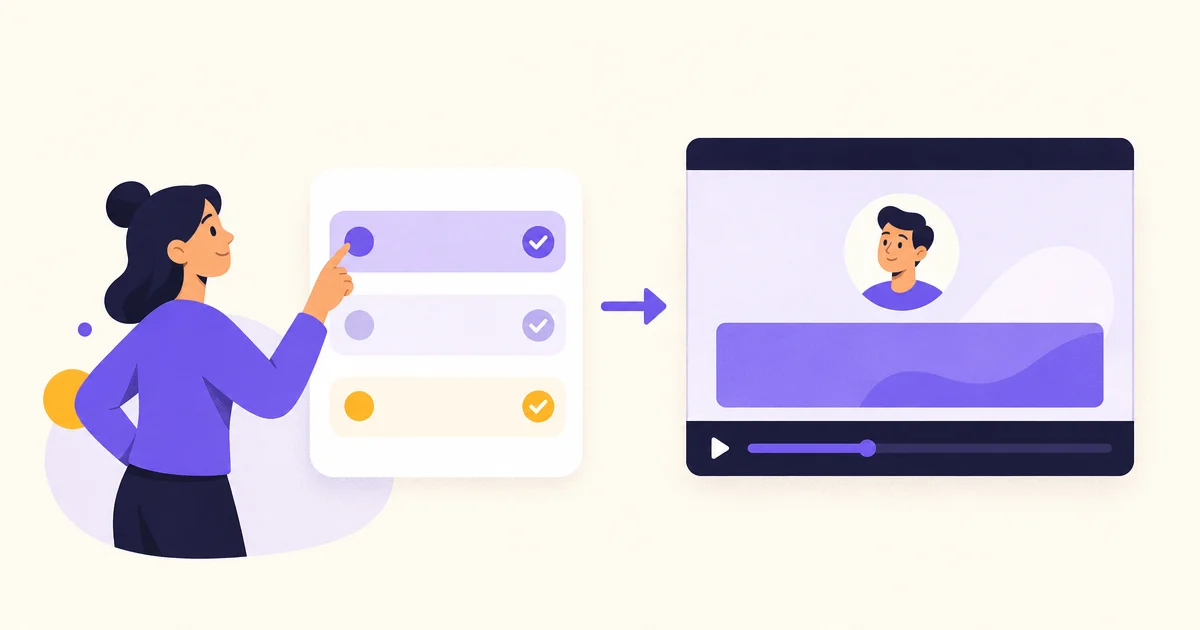
A video funnel does exactly that. The visitor answers five to fifteen questions asked by the seller on camera, covering what they want, what they can spend, what is actually blocking them. The funnel then assembles real filmed segments into a continuous ten to fifteen minute analysis video built for that profile. What is a video funnel? Definition, mechanics and 2026 data walks through the mechanics.
Three forces fire at once, and a page can trigger none of them. The visitor spent time answering, so they are committed. Ten minutes of video were made for them, so they owe something back. They watched a ten-minute pitch to the end, by choice, so they persuade themselves. That is a different transaction from scrolling a hero image.
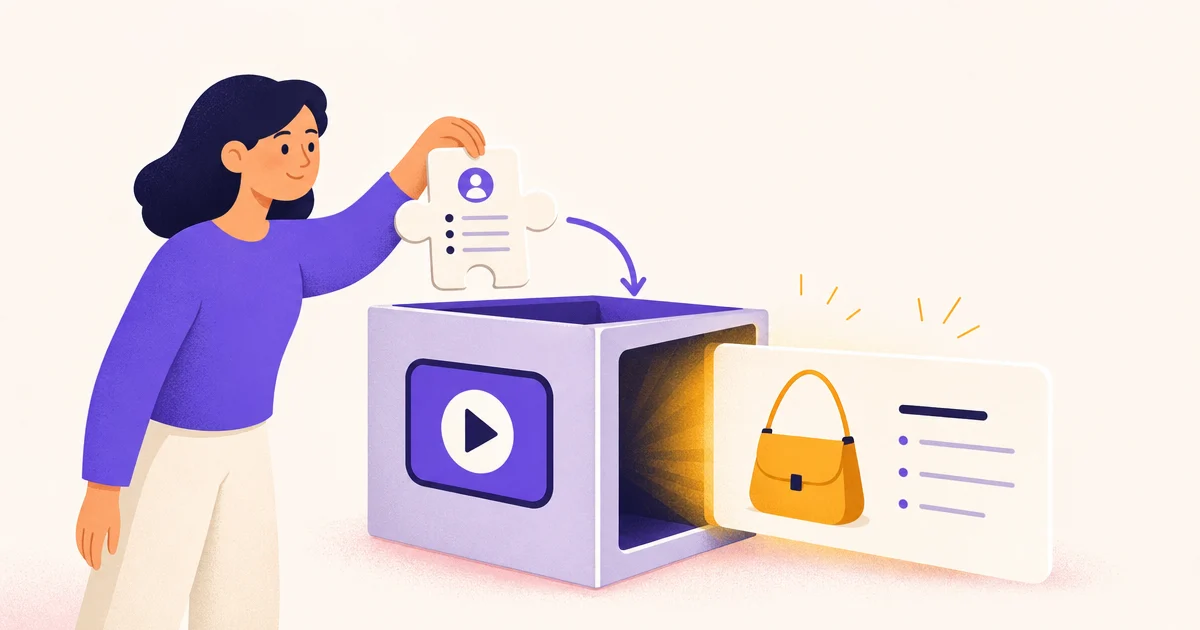
Yes, you have to film. Budget two to four hours of shooting depending on how fine the analysis gets, plus a recent phone and decent light. Five questions with three options each generate hundreds of combinations from about twenty filmed segments. It is the work the brand listed right after you in that same answer will not do.
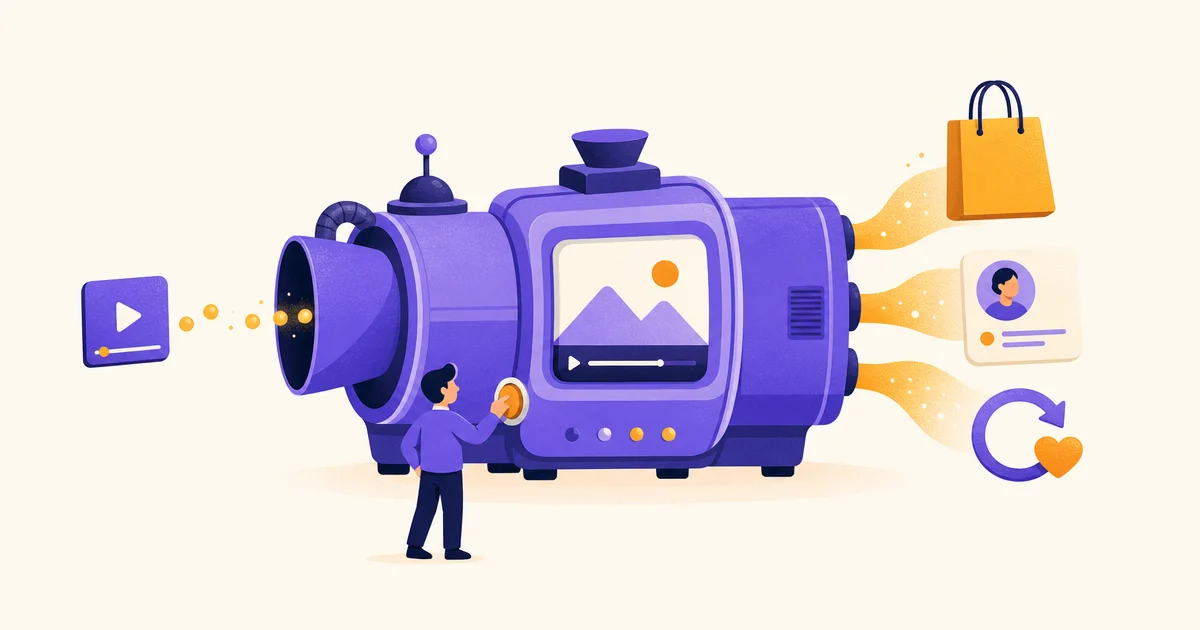
The gap widens most where buyers need advice before they commit: high carts, hard choices, skincare, jewelry, bedding, supplements. Personalized video for ecommerce: where it actually moves the numbers sets out the two conditions that decide it, and Video funnel for ecommerce: one machine that fixes ads, conversion and retention follows the chain from ad spend to repeat purchase.
Three fixes that will not do it
Since spring, three answers have been circulating. None of them returns what the visitor left in the other window.
Rewriting the hero for an informed reader buys a few tenths of a point. The page still says one thing to the shopper with sensitive skin and to the bargain hunter who has been comparing prices all week.
A prominent search bar, the second fix, sends the visitor back to the work they just paid an assistant to do for them. Nine minutes of describing a problem, so they would not have to dig through a catalog alone.
A chat widget assumes they open it, retype in three lines what took nine minutes elsewhere, and accept three links to pages they already read. Most close the tab first.
Online retail removed the salesperson, and ChatGPT just proved buyers miss one. They spend nine minutes of an evening explaining their situation to software in exchange for an opinion. So the channel that converts best now delivers people who are ready to talk, onto the single page of your site that talks to nobody in particular. Give them someone to answer.
Frequently asked questions
How do I track ChatGPT traffic in GA4?
Build a segment for sessions whose source contains chatgpt.com, openai.com, perplexity.ai, gemini.google.com or claude.ai, and use the AI Assistant channel GA4 added in May 2026. Always cross that segment with landing page. The total tells you little; the page split tells you where conversion is won or lost.
Why does this traffic show up as direct?
Because assistant mobile apps often strip the referrer header, so the session arrives with no identifiable source and falls into direct. The tell is easy to read: if your direct traffic lands on deep pages nobody types from memory or bookmarks, a good share of it came from an AI assistant.
Does ChatGPT traffic convert better than Google search?
Yes, on the US retail sites Adobe Analytics tracks. In March 2026, AI-referred visitors converted 42% better than other channels, after converting 38% worse a year earlier. Volume is still small, which makes every wasted visit more expensive than it looks on a dashboard.
Should I rebuild my homepage for AI traffic?
A more direct homepage helps, then plateaus, because it serves one message to everyone. The gain sits in something that asks a few questions and answers in personalized video: it rebuilds the context the click erased, instead of asking the visitor to type it all again.